Simple Productivity Habits for a Better Workday
Adopting simple Productivity Habits for a Better Workday is the most effective way to reclaim your time and reduce stress without burning out. By refining how you approach your daily tasks, you create a sustainable rhythm that allows you to focus on what truly matters. Instead of chasing complex systems, you can achieve more by implementing small, intentional shifts in your routine.
This article provides practical, actionable steps to help you improve your efficiency and bring a sense of calm to your professional life. You will discover how to structure your hours effectively, maintain your energy, and finish your day feeling accomplished rather than drained by an endless to-do list.
Start with a Brain Dump
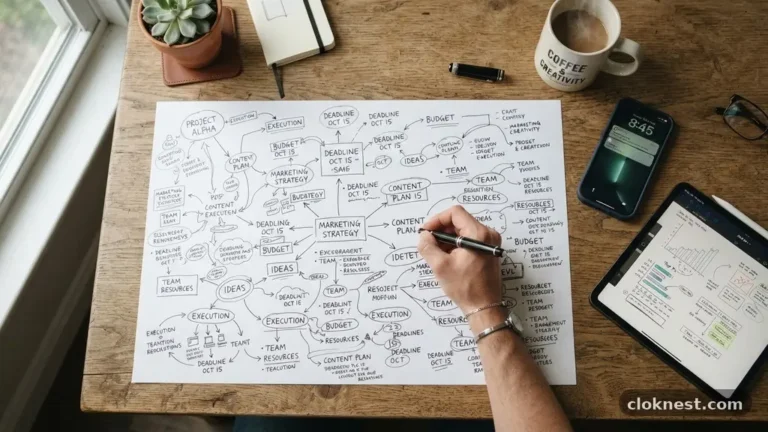
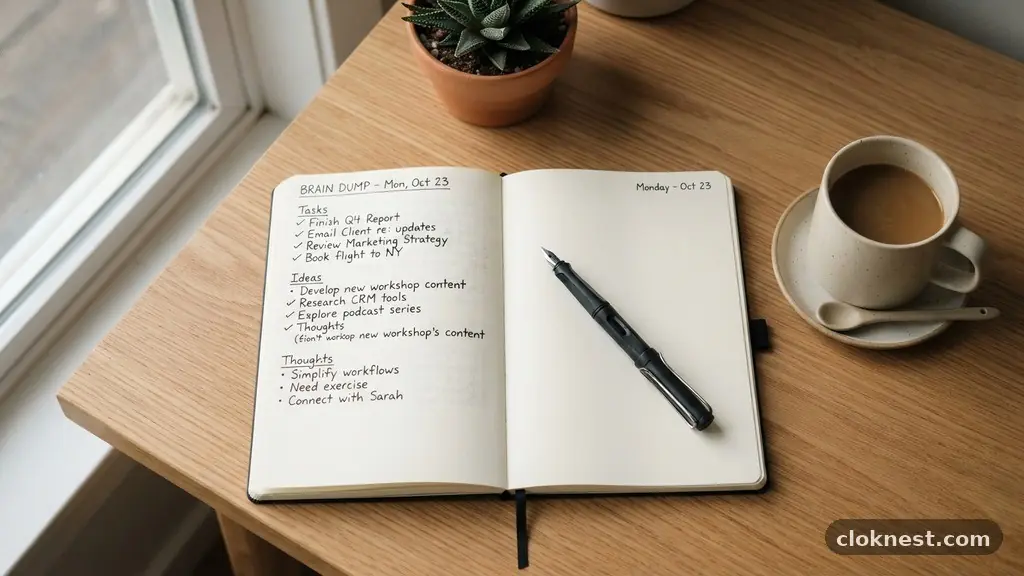
Before you open your email or jump into the first meeting, clear your mind by writing down everything you need to do. This process is essential because it externalizes your mental load, moving tasks from your active memory onto a physical or digital list.
When everything is swirling around in your head, you waste precious energy just trying to remember what comes next. By getting it all down on paper or a digital note, you create an objective map of your responsibilities.
Once you have your list, resist the urge to start working immediately. Look at the items and categorize them by urgency and effort level. A common mistake is to pick the easiest, smallest task first just to feel the satisfaction of crossing it off.
While this provides a temporary boost, it often leaves the most significant, high-impact work until the end of the day when your focus naturally begins to wane. Instead, identify your “big rock”—the one task that will move the needle the most—and commit to tackling that first.
Using a tool like a notepad or a simple app keeps this habit sustainable. The key is to keep the process friction-free. If your system for capturing tasks is too complicated, you won’t use it consistently.
Treat your brain dump as a daily ritual that signals the start of your work, helping you transition from a reactive state to a proactive one. This habit effectively clears the mental clutter that often hinders high-level cognitive performance.
Master the Art of Single-Tasking
Multitasking is a myth that drains your productivity. When you switch between tasks, your brain experiences “context switching” costs, which significantly reduce your efficiency and increase the likelihood of errors.
To improve your output, you must commit to working on one task at a time until it reaches a logical stopping point or completion. This singular focus allows you to enter a state of flow, where your work feels less like a chore and more like a natural progression of ideas.
To make this work, you need to minimize external interruptions. Silence your phone notifications, close unnecessary browser tabs, and let your colleagues know when you are in a deep work block.
It is helpful to set a timer for these periods of focus, perhaps starting with 45 minutes of dedicated work followed by a 10-minute break. This structure helps you maintain intensity without hitting a wall of fatigue.
A common pitfall is the fear of missing out on urgent messages. You might feel that you need to be available at all times, but constant interruptions are the enemy of quality work.
Train your team to understand that you are unavailable during deep work blocks, and check your messages only during scheduled windows. By batching your communication, you protect your focus and ensure that you are actually progressing on your primary goals rather than just reacting to incoming requests.
Implement the Three-Task Rule
Overloading your daily plan is a recipe for frustration. A highly effective strategy for a better workday is to limit your primary focus to just three main tasks each day. By defining these three, you provide yourself with a clear finish line.
If you complete them, you have succeeded. Anything else you manage to finish is merely a bonus, which shifts your mindset from one of constant deficit to one of genuine achievement.
The beauty of the three-task rule lies in its simplicity. It forces you to prioritize ruthlessly. When you look at your massive to-do list, ask yourself which three items, if completed, would make the day feel like a success.
Everything else is secondary. This approach helps you avoid the “busy work” trap where you spend hours on low-value activities while the important projects remain untouched.
Avoid the mistake of making these three tasks too broad. Instead of “Write Project Proposal,” refine it to “Draft the executive summary for the proposal.” Specificity makes the task feel manageable and less intimidating.
When a task is too big, your brain often resists starting it. By breaking it down into a concrete, bite-sized action, you lower the barrier to entry and make it easier to get moving.
Optimize Your Environment
Your physical and digital workspaces have a profound impact on your ability to focus. A cluttered desk often leads to a cluttered mind, making it harder to sustain concentration throughout the day. Take five minutes at the end of every day to reset your workspace.
Clear away stray papers, organize your files, and prepare your desk for the next morning. When you arrive at your workstation the following day, you won’t have to waste time clearing the remnants of yesterday’s chaos.
Digital hygiene is just as important. If your desktop is covered in random screenshots and half-finished documents, you are constantly creating visual noise. Organize your digital files into clear, logical folders.
Use a bookmarking system for the sites you visit most often. By reducing the number of clicks and visual distractions required to find what you need, you save valuable mental energy that can be directed toward your actual work.
Don’t ignore the importance of ergonomics and lighting, either. Proper lighting reduces eye strain, which is a major contributor to mid-afternoon fatigue. If you sit at a desk, ensure your chair provides adequate support.
Investing in your comfort isn’t a luxury; it is a fundamental requirement for maintaining long-term productivity. When your body feels good, your mind is much more capable of staying sharp and engaged during long hours of work.
Schedule Strategic Breaks
Many people treat breaks as an afterthought or a sign of weakness, but they are actually a vital component of high performance. Your brain is not designed to function at a high level for eight hours straight.
The American Psychological Association has highlighted the importance of managing workplace stress and mental fatigue to keep employees healthy and productive. Taking short, intentional breaks throughout the day allows your mind to recover and prevents the mid-afternoon slump.
The best way to break is to step away from your screen entirely. Walk to the kitchen for a glass of water, step outside for fresh air, or do a few light stretches.
Avoid the temptation to check social media or browse the news during your breaks, as these activities rarely provide the mental rest your brain needs. Your goal is to disconnect from the digital world so you can return to your desk with a renewed sense of clarity.
A common mistake is skipping breaks when you feel “in the zone.” While you might feel productive in the short term, this leads to a steep drop-off in energy later in the day.
Instead, treat your breaks as non-negotiable appointments. Even a five-minute stretch every hour can make a massive difference in your ability to maintain focus and stay positive until the final hour of your day.
Batch Your Communication
Email, instant messaging, and phone calls are constant interruptions that can derail your entire schedule. If you respond to every notification as it arrives, you are essentially living in a state of reaction.
To improve your efficiency, start batching your communication. Schedule specific times during the day—perhaps once in the morning, once after lunch, and once before you leave—to clear your inbox and respond to messages.
This habit requires discipline, especially if your workplace culture expects immediate replies. However, most tasks do not require an instant response.
By checking your messages in batches, you can process them more efficiently because you are in a “communication mode” rather than constantly switching between creative work and administrative tasks. You will find that you can clear your inbox much faster when you dedicate a specific window to it.
Avoid the trap of keeping your email tab open all day. The mere presence of a notification count is enough to distract you from the work at hand.
If you struggle with this, try turning off desktop notifications entirely. You will still get your work done, and you will likely find that the quality of your responses improves because you are giving them your full, undivided attention during your designated time blocks.
Reflect and Adjust
Productivity is not a static state; it is an evolving process. What works for you one month might not be as effective the next, especially as your responsibilities change. End each day with a brief reflection: What went well today?
Where did I lose the most time? Was my to-do list realistic? By asking these questions, you turn your workday into a feedback loop that helps you optimize your future efforts.
Don’t be afraid to experiment with your routine. Maybe you find that you are much sharper in the early morning, so you decide to move your most complex work to that time.
Perhaps you realize that mid-afternoon meetings are draining your creativity, so you push to schedule them later in the week. These small adjustments are what make your daily rhythm sustainable over the long haul.
A common mistake is to ignore the data your own experience provides. If you notice that you consistently fail to complete your tasks by 5:00 PM, don’t just beat yourself up.
Look at your list and see if you are consistently overestimating your capacity. Adjust your expectations, trim the non-essential tasks, and keep refining your approach until you find a balance that feels manageable and rewarding.
Cultivate a Positive Mindset
Your attitude toward your work is just as important as your time management skills. If you approach your day with dread, your productivity will inevitably suffer. Instead, look for ways to frame your tasks as opportunities rather than burdens.
Even the most administrative task can be seen as a necessary step toward a larger project goal. This mental shift helps you maintain motivation even when the work is tedious.
Celebrate your small wins. It is easy to focus only on the massive projects, but acknowledging the smaller milestones keeps your momentum going.
When you finish a challenging task or successfully stick to your schedule, take a moment to acknowledge that success. This positive reinforcement encourages you to repeat those behaviors the next day.
Avoid the trap of perfectionism. Perfectionism is often just a fancy word for procrastination; it keeps you stuck in the planning phase because you are afraid the output won’t be flawless.
Aim for “good enough” to get the task moving, and then refine it later if needed. Done is almost always better than perfect, and moving forward is the only way to make real progress in your career and your day-to-day life.
FAQ
What is the 3-3-3 rule for productivity?
The 3-3-3 rule is a simple framework to help you manage your day. You commit to completing three hours of deep work, three smaller tasks, and three maintenance tasks (like emails or filing) each day. This balance ensures you make progress on big projects while keeping up with the necessary daily upkeep.
How can I stay productive when I feel overwhelmed?
When you feel overwhelmed, stop and perform a brain dump to get everything out of your head. Once it is written down, pick just one task—the smallest, easiest one you can find—and finish it. This creates a tiny spark of momentum that helps you break the cycle of paralysis and start moving forward again.
Should I focus on my to-do list or my calendar?
Both are important, but they serve different purposes. Your calendar should be used for your time-bound commitments, like meetings or appointments. Your to-do list should contain the tasks you need to complete during your open time blocks. When you schedule your to-do items into your calendar, you gain a realistic view of what you can actually accomplish.
How do I handle colleagues who interrupt my deep work?
Communication is key. Let your team know that you are experimenting with “focus hours” to get better results. You can set your status to “busy” on messaging apps or simply block off time on your shared calendar. Most people will respect your boundaries once they understand that it helps you deliver higher-quality work for the team.
Conclusion
Integrating these habits into your routine is about creating a sustainable way to work that respects your energy and time. By choosing to focus on one task at a time, protecting your deep work, and regularly reflecting on what is working, you can transform your professional experience.
You don’t need a complex system or expensive tools to see meaningful change. Start with one or two of these simple Productivity Habits for a Better Workday and notice how your stress levels drop and your sense of accomplishment rises.
The path to a more efficient and rewarding workday is built on consistency rather than intensity. Pick one area that feels the most challenging right now and commit to improving it for just one week. As you see the benefits, you can layer in other habits at your own pace.
You have the power to shape your day into something that supports your best work and leaves you with more energy for your life outside the office. Start today, stay patient with yourself, and enjoy the process of becoming more intentional with your time.