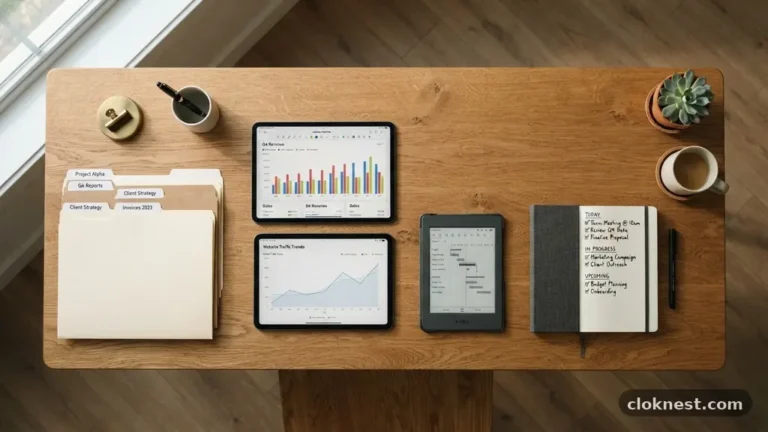

How to Build a Simple Productivity System
Building a Simple Productivity System is the most effective way to regain control of your time without feeling overwhelmed by complex methodologies. Many people struggle because they mistake complicated tracking tools for actual progress, yet the secret to consistent output lies in keeping things lean and functional. When you focus on capturing thoughts, clarifying your next steps, and dedicating space to deep work, you create a natural rhythm that sustains your energy throughout the week.
This approach allows you to stop juggling mental tabs and start making meaningful progress on the projects that truly matter to you. By stripping away the noise, you can finally find a sustainable balance between your daily responsibilities and long-term goals.
Establish a Central Capture Point
The foundation of any effective workflow is a reliable place to store information. Your brain is excellent at processing ideas, but it is notoriously poor at storing them.
When you leave tasks floating in your head, you create “open loops” that drain your cognitive resources and increase stress. By choosing one, and only one, primary capture tool, you ensure that every incoming request, brilliant idea, or sudden reminder has a designated home.
Whether you prefer a physical pocket notebook or a digital app like Google Keep, the tool itself matters far less than your consistency in using it. If you have five different places to jot down notes, you will inevitably lose track of something important. A single capture point acts as a safety net for your focus.
When a new task appears, you immediately move it from your mental space into your system. This simple act of offloading information gives your mind the permission it needs to stop worrying about forgetting things.
A common mistake is trying to organize your tasks the moment you capture them. Avoid this urge at all costs. When you are in “capture mode,” your only job is to get the information out of your head as quickly as possible.
If you stop to categorize or prioritize every single item, you will break your flow and eventually stop capturing things altogether. Keep the intake process fast, frictionless, and completely separate from your planning sessions.
Define Your Daily Focus
Once you have a list of captured items, you need a way to filter them into actionable chunks. Productivity often suffers because people treat their to-do list like a grocery store receipt—a long, undifferentiated list of things to buy.
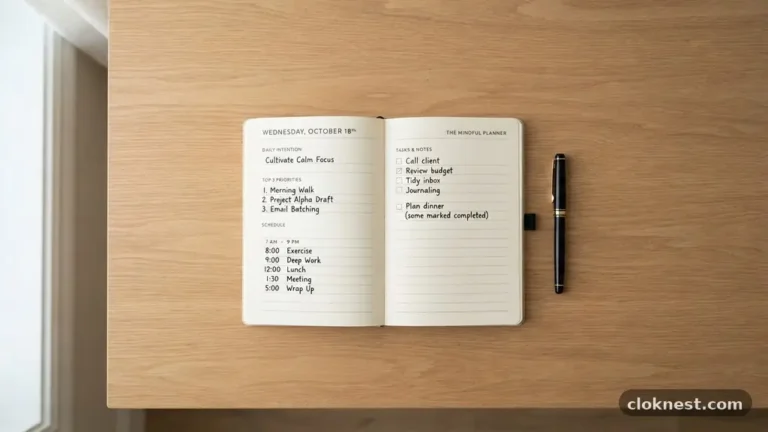
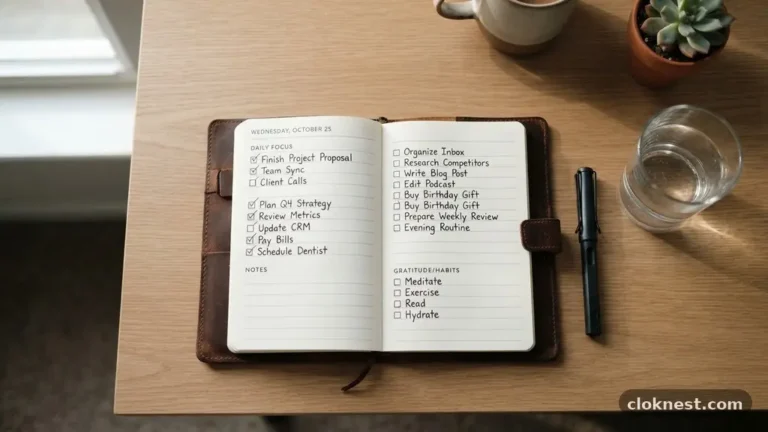
Instead, try to identify the top three tasks that will move the needle on your most important goals each day. This strategy prevents the “busy work” trap where you finish ten minor errands but fail to make progress on the project that actually pays the bills.
When you look at your list, ask yourself which items are truly essential. If you could only finish three things today, which ones would provide the most value? This isn’t just about efficiency; it’s about intentionality.
By defining your focus, you create a clear boundary for what counts as a successful day. When you hit these targets, you can end your workday with a genuine sense of accomplishment rather than the lingering guilt of an unfinished list.
The biggest mistake here is overestimating your capacity. Most people try to cram ten or twelve tasks into a day, only to feel defeated when they fall short. Start by being brutally honest about how much time you actually have.
If you have meetings, errands, and life commitments, your available time for deep work is likely much smaller than you think. Aiming to finish three significant tasks is far more realistic and leads to better long-term consistency.
Leverage Your Calendar for Reality
Your calendar should be a sacred space for your commitments, not just a place to track meetings. Many people use a calendar to record appointments but leave their actual work tasks on a separate list.
This disconnect is dangerous because it assumes you will have an infinite amount of time to complete your tasks outside of your meetings. A truly simple productivity system bridges this gap by treating your tasks like appointments with yourself.
Try blocking out specific chunks of time for your high-priority items. If you need two hours to draft a report, put that block directly on your calendar. When you treat your work as an appointment, you are much less likely to let other distractions creep in.
This method forces you to confront the reality of your schedule. If you look at your day and see no open slots, you have a visual reminder that you cannot physically take on more work.
Avoid the mistake of “optimistic scheduling.” We all tend to believe that tasks will take less time than they actually do. When you block your calendar, always add a buffer of fifteen to thirty minutes between sessions.
This allows for transition time, unexpected interruptions, or the inevitable spillover that happens when a task is more complex than anticipated. Protecting your time is not about being rigid; it is about being realistic.
Master the Art of Single-Tasking
Multitasking is a myth that destroys your cognitive output. When you switch between tasks, your brain pays a “switching cost”—a delay as you reorient yourself to the new context.
Over the course of a day, these tiny delays add up to a massive loss in productivity. To build a better system, you must commit to doing one thing at a time until that piece of the project is complete or you hit your scheduled stopping point.
When you sit down to focus, remove all distractions. Close your email, silence your phone, and clear your desk of everything except the one item you are working on. This environment creates a psychological signal that it is time to work.
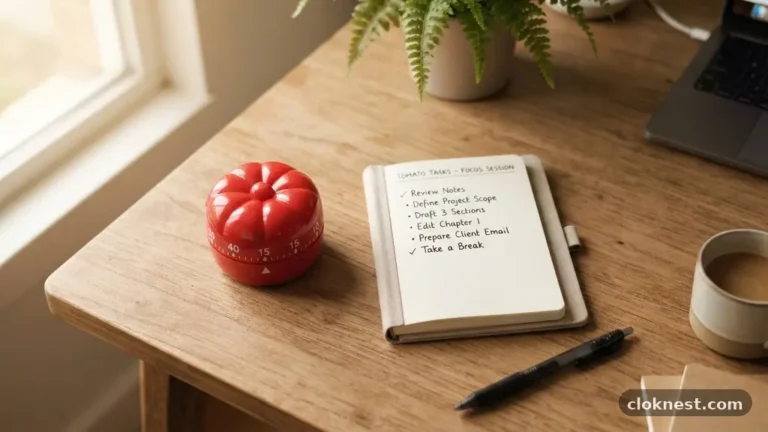
Even thirty minutes of uninterrupted focus on a single task is significantly more valuable than three hours of scattered effort. The quality of your work will improve because you are giving it your full, undivided attention.
A common pitfall is falling for “productive procrastination.” This happens when you do easy, low-value tasks just to feel like you are working, while the big, scary project sits untouched. Resist this by tackling your most challenging task first thing in the morning.
If you get your hardest work done early, the rest of the day feels like a downhill climb. You will find that your energy remains higher when you aren’t dreading a massive task hanging over your head.
Establish Weekly Review Cycles
No system survives for long without maintenance. You need a regular check-in to clear out the clutter, update your goals, and reset for the week ahead.
A weekly review is a brief period where you look back at what you accomplished and look forward to the week coming up. This simple habit keeps your system from becoming a graveyard of abandoned ideas and forgotten tasks.
During your review, look at your capture tool and empty it. Delete items that are no longer relevant, delegate things that don’t need your personal touch, and schedule the remaining items into your calendar. This is also a perfect time to reflect on your progress toward your broader life goals.
Are you spending your time on the right things? Do you need to adjust your approach to improve your efficiency?
The mistake most people make is skipping this step because it feels like “work about work.” They view the review as a chore rather than a strategic planning session. If you don’t take the time to clean your system, it will quickly become disorganized and lose your trust.
When you stop trusting your system, you stop using it. Treat your weekly review as a non-negotiable appointment with your future self.
Separate Work from Personal Life
A simple productivity system works best when it honors the boundaries between your professional and personal life. If your work tasks are constantly competing with your personal to-do list, your brain will never fully shut down. You need a way to compartmentalize these areas so that when you are working, you are fully present, and when you are off the clock, you are truly resting.
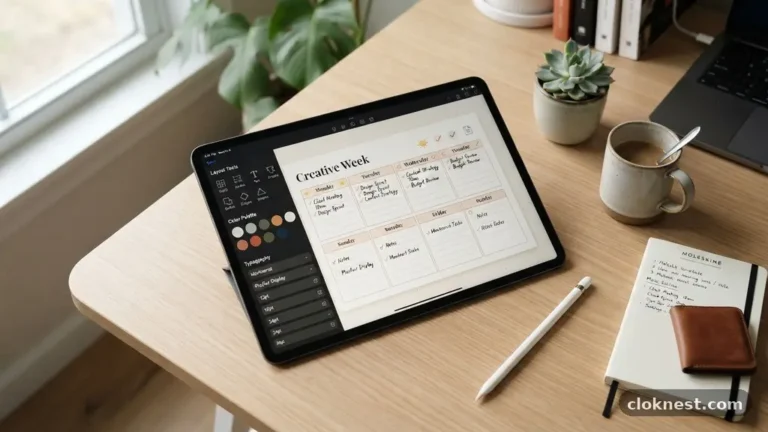
Consider maintaining separate lists or even separate digital spaces for your different roles. Some people use a tool like Notion to keep their work projects in one dashboard and their personal life in another.
Others prefer physical separation, keeping a professional planner on their desk and a personal notebook in their bag. The goal is to ensure that your brain doesn’t have to scan through household chores while trying to solve a complex work problem.
Don’t fall into the trap of letting work tasks bleed into your personal downtime. When you are at home, your attention belongs to your family, your hobbies, and your rest.
If you find yourself constantly checking your work list during the weekend, your system is failing to provide you with the mental freedom it promised. Set a hard “shutdown” time each evening where you close your tabs and step away from your lists completely.
Refine Your Toolset Gradually
It is tempting to look for the “perfect” app or notebook that will solve all your problems. Many people waste hours researching new productivity software, watching tutorials, and setting up complex templates. This is a form of procrastination in disguise.
The best system is the one you actually use, not the one with the most features or the slickest interface. Start with the simplest tools possible and only upgrade when you hit a genuine, repeatable bottleneck.
If a pen and paper work for you, stay there until you find yourself needing to search through notes or sync data across multiple devices. If you need a digital solution, pick one that is fast and reliable. Don’t worry about the bells and whistles.
The more complex your system, the higher the maintenance cost, and the more likely you are to abandon it. Complexity is the enemy of consistency.
A common mistake is changing your system too often. Every time you switch tools, you have to spend time learning the new interface and migrating your data. This is a massive drain on your energy.
Instead of chasing the latest trends, focus on building the habit of using your existing tools well. If you feel like your system isn’t working, the problem is almost always your habits, not the software.
Foster a Growth Mindset
Productivity is not a static state of being; it is a muscle that you build over time. You will have days where everything goes according to plan, and you will have days where life throws a curveball and your system falls apart.
This is completely normal. The goal of building a Simple Productivity System is not to achieve perfect, machine-like efficiency, but to create a framework that helps you bounce back from disruption.
When your system fails, don’t throw it out. Instead, look at why it happened. Did you get overwhelmed by too many tasks?
Did you forget to do your weekly review? Use these moments as data points to improve your process. If you approach your productivity with curiosity rather than judgment, you will find that your system evolves naturally to suit your changing needs.
Avoid the mistake of equating your self-worth with your output. You are not a machine, and your value as a human being is not determined by how many items you checked off your list today.
Productivity is a tool for living a better life, not the purpose of your life. Keep your perspective healthy, and you will find it much easier to sustain your efforts for the long haul.
Frequently Asked Questions
What is the best time of day to plan my tasks?
The best time to plan is usually the evening before, as it allows your brain to “prime” for the next day while you sleep. Alternatively, the first fifteen minutes of your workday can serve as a powerful launchpad if you prioritize your tasks before checking emails or messages.
How do I handle tasks that keep getting pushed to the next day?
If a task is consistently being moved, it is likely either not important, too vague, or too daunting. Try breaking it into a much smaller, immediate step, or ask yourself if it truly needs to be done at all. If it’s not essential, give yourself permission to delete it.
Is it better to use digital or paper tools?
There is no “better” option, only the one that fits your personality. Paper is excellent for focus and reducing screen time, while digital tools are superior for searching, syncing, and handling large volumes of information. Choose the one that feels most natural to you.
How can I stay productive when I have an unpredictable schedule?
Focus on a “minimum viable day” rather than a rigid schedule. Identify one or two non-negotiable tasks that you can complete regardless of how chaotic the day becomes. This keeps you moving forward without setting yourself up for failure when your plans inevitably change.
How do I stop feeling guilty when I fall behind?
Recognize that productivity is about progress, not perfection. When you fall behind, simply acknowledge it, clear your current list, and reset your priorities. Guilt is an unproductive emotion that only slows you down, so focus on the next right step instead.
Conclusion
Building a Simple Productivity System is a journey toward reclaiming your time and mental clarity. By focusing on consistent capture, realistic scheduling, and intentional daily work, you move away from the frantic pace of reactive living and into a state of purposeful action. Remember that the goal is not to fill every minute with tasks but to ensure that the time you do spend working is directed toward your most meaningful objectives.
Start small, stay patient, and trust that these simple habits will compound over time to create a significant impact on your life. As you continue refining your process, you will find that you have more energy for the things that truly matter. I encourage you to begin today by setting up your single capture point and defining your focus for tomorrow.