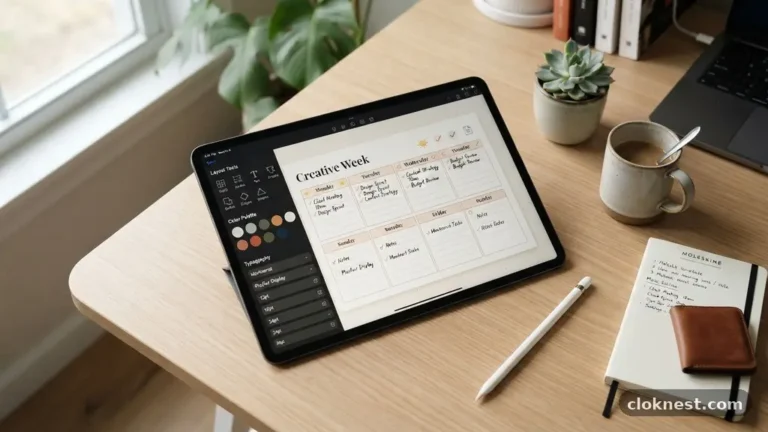

How Does Task Batching Improve Productivity?
Understanding how does task batching improve productivity requires looking at the cognitive cost of constant attention shifts. When you group related activities into specific time slots, you reduce the mental friction caused by jumping between disconnected responsibilities. This approach allows your brain to stay in a “flow state” longer, as you aren’t constantly recalibrating your focus for different types of work.
By mastering this rhythm, you’ll find that your output quality increases while your daily stress levels drop significantly. This article explores the mechanics of batching and provides actionable steps to integrate this strategy into your workflow effectively.
Categorize Your Daily Tasks
The first step in leveraging this method is to audit your current responsibilities. You cannot group what you haven’t identified. Start by listing every recurring duty you perform, from checking emails and processing invoices to writing reports or attending meetings.
Once you have this master list, look for patterns. You will likely notice that many of these duties require the same mental tools or software environments.
For instance, if you are a content creator, your list might include drafting articles, editing images, and responding to comments. These are distinct activities, but they all live within your digital workspace. By identifying these clusters, you prepare yourself to handle them in a single, dedicated session.
A common mistake here is failing to be specific enough. Don’t just write “admin work.”
Break it down into “invoicing,” “scheduling,” and “filing.” Precision in your categorization ensures that when you sit down to work, you aren’t wasting time figuring out what comes next.
Create Thematic Time Blocks
Once you have your categories, it is time to assign them to specific windows in your schedule. Think of this as thematic scheduling.
Instead of letting your day be a fragmented series of interruptions, you dedicate specific chunks of time to a single category of output. If you are a designer, you might dedicate the first two hours of your morning to deep creative work, followed by a separate block for client emails and project management.
This transition from reactive working to proactive planning is central to how task batching improves productivity. When you set a boundary around a block, you signal to yourself that your attention is reserved for that specific type of work. A mistake people often make is leaving these blocks too porous.
If you allow phone calls or instant messages to break your “deep work” block, you lose the benefits of the concentration you’ve built. Treat these blocks with the same respect you would a scheduled meeting with a high-profile client.
Minimize Mental Context Switching
The science behind this strategy is rooted in the concept of “switching costs.” Research from the Harvard Business Review highlights how shifting between tasks forces the brain to reboot its internal parameters.
Every time you move from a creative writing task to a complex financial analysis, your brain spends energy adjusting to the new logic required. By keeping similar items together in a batch, you minimize these expensive context switches.
Think of it like an assembly line in a factory. If a worker had to switch from assembling a car engine to sewing a seat cover and then back to the engine, production would grind to a halt. The worker stays in one station to perform one type of action until the batch is complete.
You are the worker, and your cognitive energy is the factory output. When you keep your focus consistent, you maintain a higher level of momentum throughout the day.
Optimize Your Energy Cycles
Not all hours of the day are created equal. Some people are sharpest in the early morning, while others hit their stride after lunch. Effective batching requires matching your most demanding batches with your peak energy levels.
If you know you are prone to brain fog at 3:00 PM, don’t schedule your most complex analytical tasks for that time. Save your low-energy batches, such as clearing out your inbox or updating your calendar, for those afternoon slumps.
A common error is ignoring your natural circadian rhythm when setting up your schedule. Trying to force a high-focus creative task during a period of natural fatigue is a recipe for frustration and poor quality.
By aligning your batches with your biological clocks, you don’t just work harder; you work smarter. This adjustment is a subtle shift that pays dividends in both the quality of your work and your overall sense of professional satisfaction.
Implement Strict Communication Windows
One of the biggest productivity killers in the modern office is the constant ping of notifications. Communication is a necessary part of work, but it doesn’t have to be a continuous interruption.
By batching your communication into three or four dedicated windows throughout the day, you reclaim your focus. For example, you could check your messages at 9:00 AM, 1:00 PM, and 4:30 PM.
The mistake most people make is keeping their email tab open all day, treating every incoming message as an immediate emergency. This fragmentation prevents you from ever truly diving into a project. When you move to a batching model, you might worry that people will think you are ignoring them.
However, most people will respect your boundaries if they know you are reliably responsive during your designated windows. It creates a predictable rhythm that actually improves the quality of your professional relationships.
Prepare Your Digital Environment
Batching is only as effective as your preparation. If you have a batch set aside for data entry, but you have to spend fifteen minutes hunting for the right files or logging into different portals, you have already broken your focus.
Spend a few minutes at the end of each day or the start of each block ensuring your tools are ready. Close all unnecessary browser tabs, mute non-essential notifications, and have your documents open and waiting.
This preparatory step is often overlooked, leading to “start-up friction.” When you minimize the friction between deciding to work and actually working, you are much more likely to maintain momentum. Think of your workspace as a cockpit.
You want everything within reach so that when you sit down for your batch, you can immediately begin executing. If you have to search for tools, you lose the mental intensity required to perform the task well.
Apply the 3-3-3 Rule for Balance
For those who find the concept of batching overwhelming, the 3-3-3 rule serves as an excellent entry point. This framework suggests that you dedicate three hours to your most significant project, complete three smaller tasks, and finish three maintenance activities each day. This is a form of macro-batching that keeps your day balanced and prevents any one type of work from overwhelming your schedule.
The beauty of this approach is its simplicity. You aren’t trying to micromanage every minute of your day; you are simply ensuring that you have distinct categories of focus. If you find yourself struggling to organize your tasks, start here.
It provides enough structure to keep you on track without feeling like a rigid cage. Once you master this basic rhythm, you can expand your batches to suit the specific needs of your role.
Address Potential Bottlenecks
Even with the best planning, life happens. Urgent requests will appear, and unexpected meetings will be scheduled. The key to successful batching is flexibility.
If you miss a batch or have to shift it, don’t view it as a failure of the system. View it as an adjustment. The goal is to return to your batching rhythm as soon as the disruption passes, rather than letting the entire day spiral into chaos.
A mistake to avoid is being too rigid. If you are three hours into a batch and you feel your focus waning, it is okay to take a break or switch to a different, lighter batch.
Productivity isn’t about brute force; it’s about maintaining a sustainable pace. By acknowledging that you are a human being and not a machine, you can build a system that supports your long-term success rather than one that burns you out.
Frequently Asked Questions
Is task batching effective for people with ADHD?
Many people with ADHD find that batching provides the necessary external structure to manage executive function challenges. By reducing the number of decisions required throughout the day, it lowers the barrier to starting work. However, it is important to allow for shorter, more frequent breaks to prevent sensory overload within those batches.
What is the difference between time blocking and task batching?
While they are often used together, they are distinct. Task batching is about grouping similar activities together to minimize switching costs. Time blocking is the practice of assigning specific tasks to specific time slots in your calendar. You can batch your tasks and then block time for those batches, creating a highly efficient schedule.
How do I handle urgent requests that fall outside my batch?
The best way is to maintain a “quick capture” list. When an urgent, non-emergency request comes in, write it down and get back to your current task. If it is a true emergency, handle it, but then immediately return to your pre-planned batch rather than continuing to work on the new, unplanned item.
Can I batch personal and professional tasks together?
Yes, and many people find it helpful. If you have errands to run, batching them together into one “errand block” is much more efficient than leaving the house multiple times. Integrating personal and professional tasks into a single master list helps you see your time as a finite resource, regardless of the nature of the work.
How long should a typical batch be?
There is no universal “correct” length. Some people find that 60 to 90 minutes is the sweet spot for deep work, while smaller administrative batches might only take 20 to 30 minutes. The ideal length depends on the complexity of the work and your personal ability to maintain focus without needing a break.
Final Thoughts
Mastering the rhythm of your day is the most effective way to reach your goals without feeling constantly overwhelmed. By grouping similar activities, you protect your mental energy and allow yourself to dive deeper into the work that truly matters. Learning how does task batching improve productivity is a journey of trial and error, so give yourself grace as you refine your approach.
Start by identifying just one category of work you can group tomorrow, and notice how much easier it feels to initiate that work. Consistency, rather than perfection, is the secret to building a sustainable, high-output workflow. Take control of your schedule today, and you will soon see the benefits in your results and your peace of mind.