
How to Create a Weekly Planning Routine
Creating a Weekly Planning Routine is the single most effective way to reclaim your time and reduce the mental weight of an endless to-do list. By dedicating a small window of focus once every seven days, you stop reacting to urgent emails and start proactively managing your life. This process isn’t about rigid micromanagement; it’s about aligning your daily efforts with your long-term goals.
When you know exactly what needs to happen and when, you gain the clarity required to perform your best work without the constant anxiety of forgotten deadlines or missed opportunities. You’ll find that having a clear roadmap makes the transition between tasks much smoother.
Find Your Ideal Time for Reflection
The most successful people don’t just hope for a productive week; they manufacture it through intentional preparation. Choosing the right time to sit down and map out your upcoming days is the first step toward consistency.
For many, Sunday evening works best because it allows for a calm transition into the new week, free from the immediate pressures of the office. Others prefer Friday afternoon, treating it as a closing ceremony for their professional obligations so they can fully disconnect during their time off.
Experimenting with different slots is essential to discovering what sticks. If you try Sunday nights but find yourself feeling anxious about the Monday morning rush, switch to a Monday morning ritual instead. The goal isn’t to force yourself into a specific hour, but to find a time when you feel clear-headed and undistracted.
When you treat this period as a non-negotiable appointment with yourself, you signal to your brain that your schedule is a priority. Avoid the common mistake of trying to plan while multitasking or during a chaotic commute. You need space to think, which means removing digital distractions and finding a quiet environment where you can focus on the bigger picture.
Review the Previous Week
Before you look forward, you must look back. Reviewing the previous week helps you understand where your time actually went, rather than where you thought it was going. This is where you identify patterns of inefficiency or recurring bottlenecks that keep you from your goals.
Did you spend three hours in meetings that could have been emails? Did a specific project take twice as long as you estimated? These insights are the raw data you need to build a better schedule for the days ahead.
Be honest with yourself during this audit. If you didn’t finish a task, don’t just push it to the next day without asking why. Perhaps the task was poorly defined, or perhaps you lacked the necessary resources to complete it.
By acknowledging these realities, you stop setting yourself up for failure. Use this time to celebrate small wins as well. Recognising what you did accomplish reinforces your momentum and keeps your spirits high.
A common mistake here is rushing through this phase or skipping it entirely because it feels like dwelling on the past. Instead, view it as a necessary course correction that ensures your future efforts are more targeted and effective.
Define Your Top Three Priorities
Once you have a handle on the past, shift your focus to the upcoming seven days. The temptation is always to list everything you think you should do, which leads to a bloated schedule and eventual burnout. Instead, identify your top three priorities for the week.
These should be the high-impact tasks that, if completed, would make the most significant difference in your progress toward your long-term goals. Everything else is secondary and should only be addressed once these primary objectives are secured.
By narrowing your focus to three main items, you create a psychological anchor that guides your daily decisions. When a request comes in mid-week, you can quickly evaluate whether it supports one of those top priorities. If it doesn’t, you have the justification to say no or delegate the work.
This approach aligns with the principles of effective time management that emphasize focusing on outcomes rather than just activity. Avoid the mistake of turning your priority list into a dumping ground for minor chores. Keep your focus on the big-picture items that require your unique skills and attention.
Map Your Tasks to Your Schedule
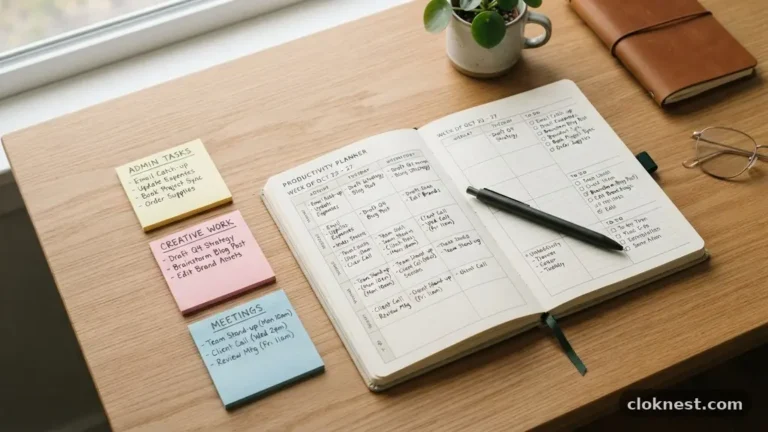
With your priorities set, it’s time to move them from a list into your actual calendar. This is the difference between a wish list and a plan. Use a process called time-blocking, where you assign specific windows of time to specific tasks.
If you need to write a report, don’t just write “write report” on your to-do list; block out Tuesday morning from 9:00 AM to 11:00 AM specifically for that activity. This forces you to be realistic about how much you can actually accomplish in a day.
When you block your time, remember to include buffer zones. Life rarely goes exactly to plan, and unexpected interruptions are inevitable. By leaving small gaps between major tasks, you ensure that one minor delay doesn’t derail your entire schedule.
This strategy also protects your mental energy, allowing you to transition between different types of work without feeling rushed. A common mistake is filling every single hour of the day with tasks, leaving no room for the unplanned realities of life. If your calendar looks like a solid block of color with no white space, you are likely setting yourself up for frustration.
Incorporate Personal Well-being
A schedule that only accounts for professional obligations is a recipe for exhaustion. True balance comes from integrating your personal needs into your weekly planning routine. This includes everything from exercise and meal prep to socializing and downtime.
When you schedule your workout or your time for hobbies, you are treating those activities with the same respect as a board meeting. This mindset shift is vital for long-term sustainability.
If you don’t schedule your rest, you will likely sacrifice it whenever work gets busy. By putting it on the calendar first, you ensure that your health and personal life are protected. Think about the energy you need to tackle your top priorities.
If you aren’t sleeping enough or moving your body, your cognitive performance will inevitably suffer. Avoid the mistake of viewing personal time as what is “left over” after all the work is done. It should be a foundational pillar of your week, not an afterthought.
Use Visual Cues and Tools
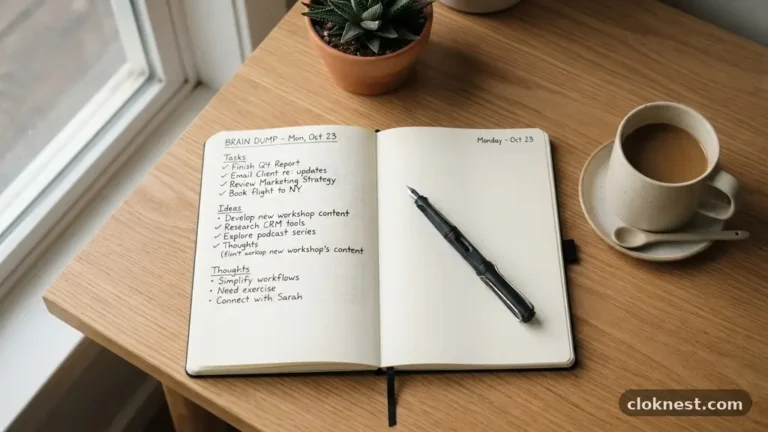
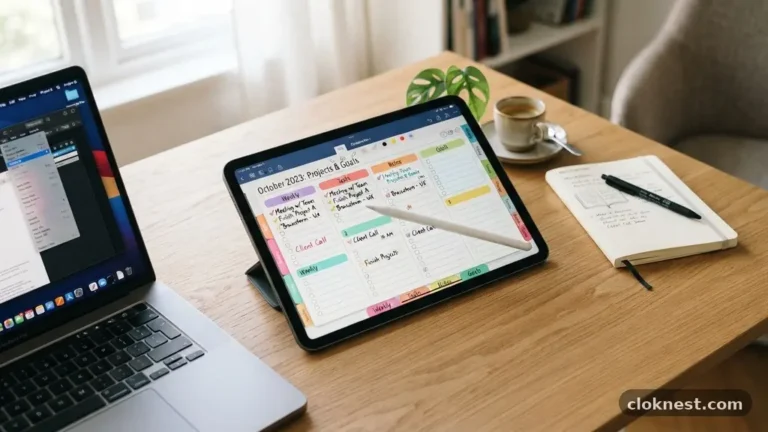
The medium you use to manage your time matters significantly. Whether you prefer a digital calendar app, a paper planner, or a hybrid of both, the goal is to make your system visible and accessible.
Digital tools are excellent for setting reminders, handling recurring tasks, and making quick changes, while paper planners often provide a better sense of overview and help with memory retention. Choose the system that feels most natural to you, as you are far more likely to stick with something you enjoy using.
Visualizing your week helps you spot imbalances before they happen. For example, if you see that your Wednesday is packed with back-to-back meetings, you can proactively move some of your analytical work to Thursday. This visual check-in prevents the “surprise” of a busy week.
A common mistake is switching tools too often in search of the perfect app or notebook. No tool will do the work for you. Pick one, commit to it for at least a month, and focus on refining your process rather than hunting for new features.
Anticipate Obstacles and Plan Responses
Even the best-laid plans encounter friction. A proactive planner doesn’t just list what they want to do; they also anticipate what might go wrong. Think about the potential roadblocks that could interfere with your weekly goals.
Perhaps you have a recurring meeting that always runs over, or maybe you struggle with energy slumps on Thursday afternoons. By identifying these potential friction points in advance, you can create “if-then” plans to handle them.
For instance, you might decide: “If my Tuesday meeting runs over, then I will shift my afternoon deep-work session to Wednesday morning.” Having a pre-determined response reduces the need for decision-making in the moment when stress levels are high. It keeps you from spiraling into frustration or abandoning your schedule when the unexpected happens.
The mistake to avoid is assuming that a perfect plan will result in a perfect week. Perfection isn’t the goal; resilience is. By preparing for the inevitable bumps, you maintain control even when things deviate from the path.
Refine Your System Through Iteration
Your planning routine should evolve as your life and responsibilities change. What worked for you six months ago might not be effective today, and that is perfectly fine. Treat your planning system as a living document that you update and refine.
Every few weeks, take a moment to assess whether your current method is still serving you or if it has become a burden. Are you finding the process helpful, or does it feel like just another chore?
If you feel overwhelmed, simplify. If you feel like you’re missing important details, add a new step or a different category to your review. This iterative approach ensures that your system stays aligned with your reality.
It also keeps the process from becoming stale or robotic. A common mistake is sticking to a rigid, outdated system simply because “that’s how I’ve always done it.”
Give yourself permission to change your approach, try new templates, or switch up your timing. When you stay flexible, you remain in the driver’s seat of your own time.
Frequently Asked Questions
How can I make my weekly planning feel less like a chore?
Try pairing your planning time with a small ritual you enjoy, such as listening to a specific playlist, enjoying a cup of coffee, or sitting in a favorite chair. When you associate the task with a positive sensory experience, it becomes something you look forward to rather than a burden you dread.
What is the 3-3-3 rule for tasks?
The 3-3-3 rule is a framework for balancing your workload. It suggests that in any given day, you should aim to accomplish three hours of deep work on your most important project, complete three shorter tasks, and perform three maintenance activities like answering emails or filing paperwork. It helps you stay productive without overcommitting your limited energy.
Can I create my own weekly planner if I don’t like store-bought ones?
Absolutely. Many people find that a simple blank notebook or a custom-designed digital spreadsheet works better than mass-produced planners.
Start by sketching out a grid that includes the days of the week and spaces for your top three priorities and your time blocks. If you find you need more or less space for specific categories, you can adjust your layout each week until you find the structure that fits your brain.
How do I handle tasks that keep getting pushed to the next week?
If a task consistently fails to make it off your list, it usually means one of two things: it isn’t actually a priority, or it’s too big and needs to be broken down. Try to break the task into smaller, actionable steps that take less than an hour.
If you still find yourself avoiding it, ask yourself if the task is truly necessary to reach your goals. Sometimes, the best way to manage a task is to decide it doesn’t need to be done at all.
What should I do when my week gets completely derailed?
When the unexpected happens and your plan falls apart, don’t waste energy feeling guilty. Acknowledge that the plan was disrupted, take a deep breath, and perform a mini-reset.
Look at your remaining days and re-prioritize based on what is now most important. The goal of your weekly planning routine is to provide a baseline for decision-making, and that baseline remains useful even when you have to pivot mid-week.
Final Thoughts
Mastering the art of planning is about finding a balance between structure and adaptability. By establishing a consistent rhythm, you provide your brain with the clarity it needs to navigate complex days and high-pressure projects.
You are essentially building a safety net that catches you when things get busy and points you toward what truly matters. Remember that the goal isn’t to control every single minute of your existence, but to ensure that your hours are spent in alignment with your values and objectives.
Start small by picking one specific time this week for your first session of creating a Weekly Planning Routine. Don’t worry about being perfect; simply focus on the act of showing up for yourself and your goals.
As you refine your process, you will likely find that your stress decreases and your sense of agency increases significantly. Take that first step today, and enjoy the peace of mind that comes from knowing exactly where you are headed.