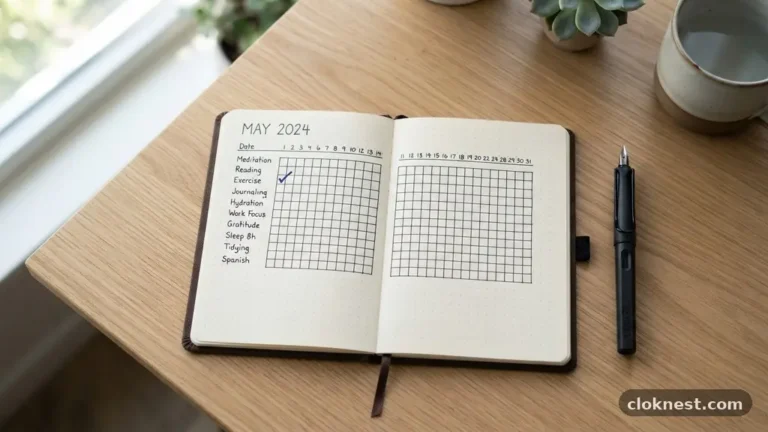

How to Start a Habit Tracker
Starting a Habit Tracker is a transformative step toward reclaiming your time and aligning your daily actions with your long-term goals. By visualizing your progress, you turn abstract intentions into concrete data, making it significantly easier to sustain motivation during the difficult early stages of behavioral change.
Whether you want to drink more water, dedicate time to reading, or exercise consistently, externalizing these goals prevents you from relying solely on willpower. This approach offers a clear roadmap for personal growth, helping you understand your patterns while building the momentum needed to turn fleeting desires into permanent, positive aspects of your life.
Selecting Your Medium for Habit Tracking
The first decision you face is choosing between a physical notebook, a dedicated app, or a simple spreadsheet. Each method has distinct psychological impacts.
A physical journal offers a tactile experience that helps ground your intentions, while digital trackers provide automated reminders and detailed data visualization. If you enjoy the sensation of putting pen to paper, a bullet journal or a dedicated habit planner is often the most rewarding route.
For those who prefer efficiency and data, digital apps are exceptionally effective. They often include push notifications, which act as a gentle nudge when you are likely to forget a task. However, the common mistake here is over-complicating the system.
Avoid downloading five different apps or setting up an elaborate color-coded spreadsheet that takes twenty minutes to update every evening. If the maintenance of the tracker becomes a chore, you will abandon it within a week. Pick one method and stick to it for at least one full month.
Defining Your Core Habits
When you begin, the temptation to overhaul your entire life overnight is strong. You might decide to wake up at 5:00 AM, meditate for an hour, run five miles, and read fifty pages daily. This is a recipe for burnout.
Instead, focus on two or three high-impact habits that will provide the most benefit to your well-being. If you want to improve your hydration, tracking the number of glasses water you consume is a perfect, measurable goal.
Keep your habits small and specific. Instead of writing “exercise” on your tracker, write “ten minutes of stretching.” By lowering the barrier to entry, you ensure that even on your most exhausted days, you can still check the box.
This maintains your streak and keeps the psychological momentum alive. Remember that the goal is consistency, not intensity. Once you prove to yourself that you can show up every day, you can gradually increase the difficulty or duration of your tasks.
The Power of Habit Stacking
The most effective way to ensure a new behavior sticks is to anchor it to an existing routine. This technique, often called habit stacking, involves performing a new action immediately before or after a habit you already perform without thinking.
For example, if you want to take a daily vitamin, place the bottle next to your coffee maker. After you pour your morning coffee, you immediately take the vitamin.
This strategy removes the mental friction associated with starting something new. You don’t need to remember to perform the task; the environment triggers the behavior for you. When you integrate this into your habit tracker, you are essentially documenting the completion of a sequence rather than a singular, isolated action.
If you find yourself missing your tasks, look at your schedule and see if you can stack them closer to established parts of your day. A habit that exists in a vacuum is much harder to maintain than one that is part of a flow.
Designing Your Tracking System
Your habit tracker should be a source of encouragement, not a source of guilt. If you are using a paper tracker, use simple grids where you can mark an X or fill in a square for each successful day. If you prefer a digital format, look for tools that offer simple “yes” or “no” toggles.
The visual representation of a “streak” is a powerful psychological tool. It leverages the “don’t break the chain” philosophy, which encourages you to keep going simply because you don’t want to lose the progress you have already made.
Avoid the mistake of tracking too many metrics at once. If you are tracking ten different things, you will inevitably have days where you miss several, which can lead to feelings of failure. Stick to a maximum of five habits for the first month.
If you find yourself consistently hitting those five, you can add more. Remember that the act of tracking is meant to support your life, not dominate it. Keep the design clean and the requirements minimal so that checking your progress takes no more than sixty seconds.
Managing Missing Days
Life is unpredictable, and you will eventually miss a day. The most common mistake people make when starting a Habit Tracker is viewing a missed day as a total failure.
They might think, “I missed Tuesday, so the whole week is ruined,” and subsequently give up on the habit entirely. This is known as the “what-the-hell effect,” where one small slip leads to a complete abandonment of your goals.
Adopt the “never miss twice” rule instead. If you miss your habit one day, prioritize doing it the very next day above all else. This prevents a single mistake from becoming a new, negative pattern.
When you look back at your tracker at the end of the month, a few empty squares do not invalidate the twenty-five days you successfully completed the task. Treat your tracker as a record of your progress, not a judge of your character.
Integrating Micro-Habits
Sometimes, the best approach is to make your habits so small they seem ridiculous. If you want to start reading more, set your goal to reading just one page per day. If you want to start a fitness routine, set your goal to doing one push-up.
These micro-habits are designed to overcome the inertia of starting. Once you have started, you will often find that you naturally continue for longer than you initially planned.
The habit tracker is essential here because it validates these small wins. When you mark off a day for “one page of reading,” you are reinforcing the identity of someone who reads every day. This identity shift is more important than the actual volume of work you accomplish in the first few weeks.
Over time, these small actions compound, leading to significant changes in your lifestyle. According to research on behavioral psychology, consistent repetition is the primary driver of automaticity in human behavior, which you can explore further through the American Psychological Association resources.
Reviewing Your Progress
At the end of each month, take time to review your tracker. Look for trends and patterns. Did you consistently miss your habit on weekends?
Perhaps you need to adjust your expectations for those days. Did you notice that you performed better when you did your habit in the morning? Use this data to optimize your routine for the upcoming month.
Reflection is the bridge between tracking and genuine growth. If you simply fill in boxes without ever looking at the overall picture, you miss the opportunity to learn about your own behavior. Ask yourself what made the hard days difficult and what made the easy days successful.
This feedback loop allows you to refine your approach, ensuring that your habits remain sustainable in the long run. If you don’t review, you are just performing tasks; when you review, you are designing your life.
Common Pitfalls to Avoid
Many beginners fall into the trap of “productivity theater,” where they spend more time decorating their tracker or researching the perfect app than actually performing the habits. Your tracker is a tool, not a project. If you find yourself spending more than a few minutes a day on the administrative side of tracking, simplify your system immediately.
Another pitfall is focusing on the outcome rather than the process. If you are tracking “lose five pounds,” you are tracking a goal, not a habit. A habit tracker should focus on the input, not the output.
Instead of tracking weight, track “walk for twenty minutes” or “eat a vegetable with dinner.” You cannot control the outcome directly, but you can control the daily actions that lead to it. When you focus on the process, the results tend to take care of themselves.
Frequently Asked Questions
How many habits should I track at once?
It is best to start with no more than three habits. Starting with too many tasks often leads to overwhelm and makes it difficult to maintain consistency. Once you have mastered your initial set, you can slowly add one or two more.
What if I forget to update my tracker for a few days?
Don’t worry about it. If you remember what you did, fill it in retroactively.
If you aren’t sure, just start fresh from the current day. The tracker serves your life, and missing a few entries doesn’t mean your progress didn’t happen.
Is it better to use a paper or digital tracker?
The best tracker is the one you actually use. If you love technology and carry your phone everywhere, an app is ideal. If you prefer to disconnect from screens, a physical planner or a simple wall calendar will work much better for you.
What is the 3-3-3 rule for habit building?
The 3-3-3 rule is a popular method where you focus on three habits, for three weeks, to see if they stick. It is a great way to test new behaviors without committing to a permanent change immediately, helping you figure out what actually fits your lifestyle.
Building Your Future Through Consistency
Starting a Habit Tracker is an act of self-respect. It signifies that you are ready to take responsibility for your daily choices and move toward a version of yourself that aligns with your values. By breaking big goals into small, manageable actions, you create a sustainable path toward improvement.
Remember that perfection is not the goal; consistency is. Each mark on your tracker represents a small victory over your own resistance, and those victories compound over time to create lasting change.
Take the first step today by choosing one small habit and placing your tracker where you will see it every morning. You do not need to wait for a new month or a new year to begin.
Simply start where you are, with what you have, and trust the process of daily refinement. Your future self will thank you for the work you put in today.