What Is a Daily Planner and How Does It Work?
Understanding a daily planner and how does it work is the first step toward reclaiming your time and mental clarity. By externalizing your responsibilities, you stop relying on your brain to hold onto every fleeting thought, which reduces stress and prevents important items from slipping through the cracks. Whether you prefer the tactile experience of pen on paper or the convenience of a modern mobile app, this tool acts as a dedicated space for your intentions.
Learning to manage your day effectively allows you to focus on what truly matters, turning chaotic schedules into a balanced life. You will soon see how simple adjustments lead to significant improvements in your daily productivity.
Selecting the Format That Fits Your Life
Before you can start organizing your time, you have to choose the right medium for your needs. There is no single “best” option, as the ideal format depends entirely on your personal workflow and preferences. Some people thrive when they have a physical notebook in hand.
The act of physically writing down tasks creates a cognitive connection that helps with memory retention and provides a satisfying sense of accomplishment when you cross something off. If you are someone who enjoys tactile feedback, a paper-based system might be your most effective choice.
On the other hand, digital tools offer flexibility that paper cannot match. If your life involves constantly shifting deadlines, a mobile app or a desktop calendar allows you to move tasks around with a simple drag-and-drop motion.
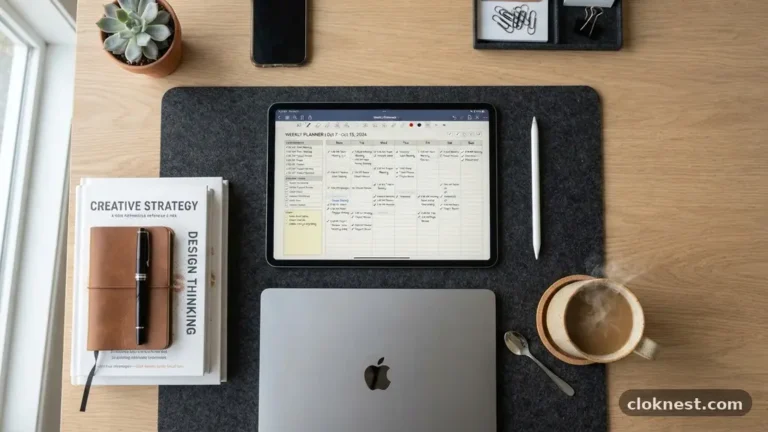
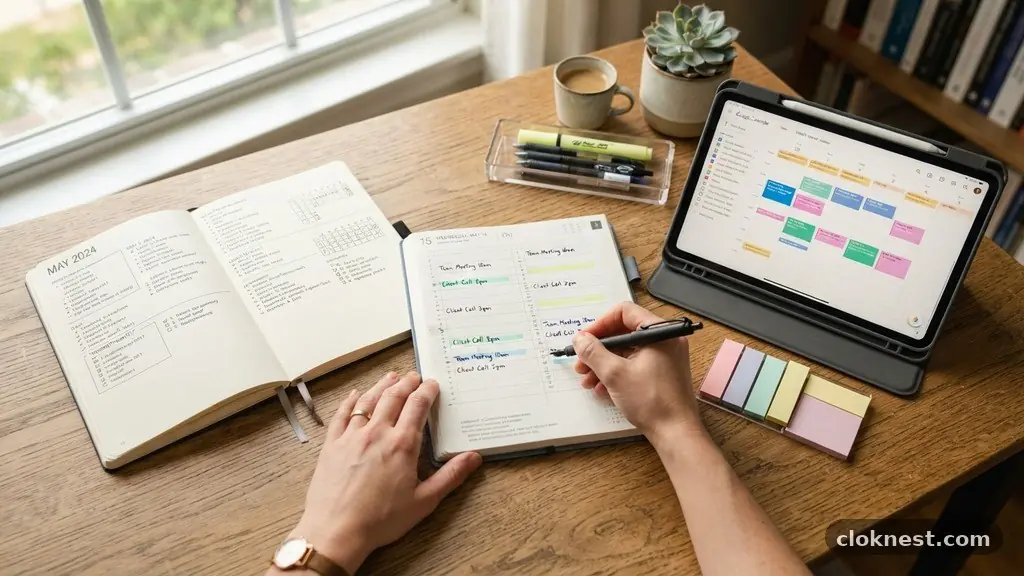
These tools often include notifications and reminders, which are essential if you frequently lose track of time or miss appointments. Many professionals find that a hybrid approach—using a digital calendar for fixed appointments and a physical notebook for daily tasks—offers the perfect balance.
A common mistake is choosing a complex, high-end planner because it looks professional, only to realize it doesn’t match how you actually think. Start simple. You don’t need a heavy, expensive binder to manage your time.
If you are struggling to decide, look at the Mind Tools time management techniques to see which methodologies align with your current habits. By matching your tool to your personality rather than an aesthetic ideal, you increase the likelihood that you will actually use it consistently.
Setting Up Your First Daily Plan
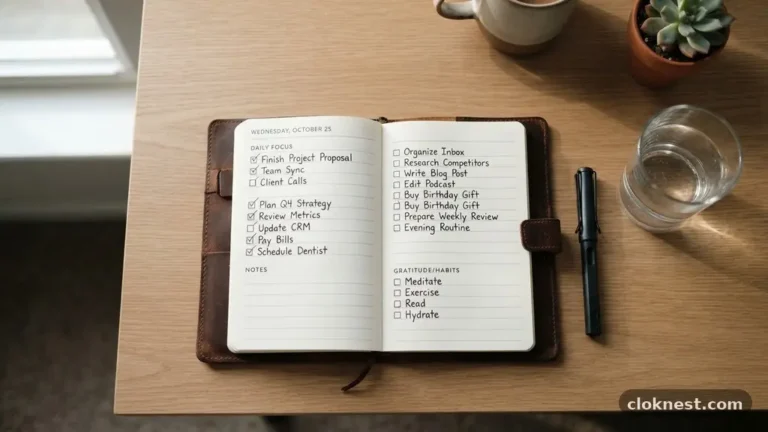
Once you have your tool, you need to establish a routine for entering your information. The most effective way to use this system is to spend ten minutes at the end of every day preparing for the next one.
This practice clears your head before you go to sleep, ensuring you don’t wake up anxious about what you might have forgotten. Start by listing your “must-do” items—the non-negotiable tasks that have firm deadlines or significant consequences if ignored.
After the essential items are documented, add your appointments. These are events tied to specific times, such as meetings, gym classes, or lunch with a friend. By blocking out these fixed events first, you quickly see how much “free” time you actually have left in your day.
This realization is often a shock to people who overestimate their capacity. If you have eight hours of work but only two hours of unscheduled time, you shouldn’t try to cram five hours of secondary tasks into that gap.
A frequent error is over-scheduling. When you fill every single slot in your day, you leave no room for the inevitable interruptions that occur in life. If a phone call takes longer than expected or a document requires an extra hour of editing, your entire schedule collapses.
Always include a buffer zone. Treat these gaps not as wasted time, but as essential breathing room that keeps your system from failing when the unexpected happens.
Categorizing Tasks for Better Focus
Not all tasks carry the same weight, yet many people treat them as equal entries on a list. To improve your efficiency, you need to categorize your work.
One common method is the Eisenhower Matrix, which sorts items into four buckets: urgent and important, important but not urgent, urgent but not important, and neither. This approach forces you to stop and think about the value of each task before you commit to doing it.
When you write your list, use symbols or colors to differentiate these categories. You might highlight high-priority items in red or use a specific bullet point for tasks that can be delegated to others.
This visual hierarchy helps you scan your page and immediately understand where your energy should go first. It stops the common habit of “productive procrastination,” where you spend the morning doing easy, low-value tasks just to feel busy while ignoring the big, scary projects that actually move the needle.
Avoid the temptation to list every minor detail. If you write down “brush teeth” or “check email,” you are just padding your list to make it look longer. Focus on outcomes rather than activities.
Instead of writing “work on project,” write “complete draft of project introduction.” Specificity reduces the friction of starting a task because your brain knows exactly what the first action step is. When the task feels concrete, you are much more likely to dive in without hesitation.
Integrating Weekly Reviews
A daily planner works best when it is part of a larger, weekly cycle. While your daily pages handle the tactical “what” and “how,” your weekly review serves as the strategic “why.” Once a week—perhaps on a Sunday evening or a quiet Friday afternoon—sit down to look at the big picture.
Review what you accomplished over the past few days and assess where you fell short. Did you consistently underestimate how long meetings would take? Did you ignore a recurring project because it felt overwhelming?
This weekly check-in is the secret to refining your process. If you notice that you never get to your creative work because you are bogged down by administrative tasks, you might decide to dedicate specific mornings to your most important projects for the following week.
This is also the time to look at your calendar for the month ahead. Are there birthdays, deadlines, or upcoming travel plans that you need to account for?
A common pitfall is treating the planner as a static document that you only look at once. If you don’t review your progress, you are just repeating the same mistakes every day. Your system should be a living, breathing map of your intentions.
If a task keeps getting pushed from one day to the next, be honest with yourself: is it really necessary, or are you just afraid of doing it? Sometimes, the most powerful thing you can do is cross a task off your list entirely because it no longer aligns with your goals.
Managing Energy Levels Alongside Time
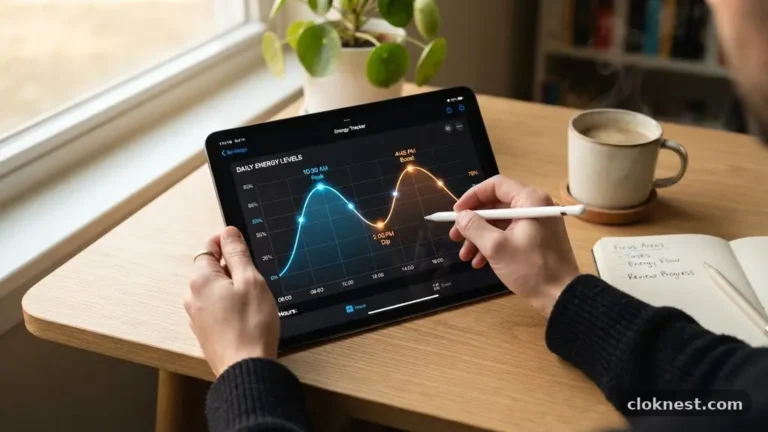
Time is a finite resource, but energy is variable. You might have two hours set aside for deep work, but if you are exhausted, that time will be unproductive. A sophisticated approach to planning involves mapping your tasks to your natural energy cycles.
If you know you are sharpest in the morning, schedule your most demanding or creative work for those hours. Leave the afternoon for meetings, emails, or administrative errands that require less cognitive intensity.
If you are using a digital app, you can label tasks by “energy required” or “context.” For example, you might create a list for “low energy” items that you can knock out when you are feeling drained.
This ensures that you aren’t trying to write a complex report when you should be doing something simpler. By respecting your body’s natural rhythms, you reduce the feeling of burnout that often comes from forcing yourself to work against your biology.
Do not ignore the need for rest in your schedule. If you don’t plan for breaks, you will eventually take them anyway, often at the most inconvenient times. Schedule a short walk after lunch or a fifteen-minute block of silence mid-afternoon.
These aren’t just “time off”; they are necessary maintenance for your brain. People who view their planner as a rigid task-master often fail because they treat themselves like robots. A successful system acknowledges that you are a human being who needs downtime to function at a high level.
Handling the Unexpected and Overcoming Resistance
Even with the best preparation, life will throw curveballs. A sick child, a car breakdown, or an urgent request from a supervisor can derail your perfectly laid plans. When this happens, don’t abandon the system.
Instead, practice “triage.” Look at your list and immediately identify the three things that absolutely must happen today.
Everything else becomes optional. It is better to complete the top three tasks and feel successful than to try to do everything and feel like a failure when you fall short.
Resistance is another common hurdle. Sometimes you just don’t want to do the work. When you find yourself staring at your planner and feeling paralyzed, use the “five-minute rule.”
Tell yourself you will work on the task for just five minutes, and if you still hate it after that, you can stop. Most of the time, the hardest part is the transition into the task. Once you have started, the momentum usually carries you forward.
The biggest mistake here is perfectionism. People often stop using their planner because they missed a few days or their handwriting looks messy. They feel like they have “ruined” the book, so they quit entirely.
Remind yourself that the planner is a tool, not a museum piece. If you miss a day, just move on to the next one. The purpose of the tool is to help you live your life, not to win a prize for the most organized page.
Building Sustainable Habits
Consistency is the bedrock of any planning system. If you only use your planner when you are stressed, you will never see the true benefits. You need to make the act of planning a non-negotiable part of your identity.
Think of it as a form of self-respect. By taking the time to plan, you are telling yourself that your time and your goals are valuable. This mindset shift is what separates people who struggle to keep up from those who feel in control.
Start by placing your planner in a visible spot. If you use a physical notebook, keep it open on your desk. If you use an app, put the widget on your home screen so you see it every time you unlock your phone.
The easier it is to access, the more likely you are to use it. If you find yourself ignoring your planner, it might be because the system is too complicated.
Strip it back. If you only need a simple list and a calendar, don’t worry about trackers, goals, or fancy layouts.
Another way to build the habit is to pair it with something you already enjoy. Perhaps you drink your morning coffee while you review your tasks, or you listen to a specific playlist while you plan your afternoon.
These “habit stacks” make the process feel like a treat rather than a chore. If you view your planning time as a moment of peace in a busy day, you will start looking forward to it.
Refining Your Approach Over Time
As you get more comfortable with your system, you will start to notice patterns. You might realize that you always overestimate how much you can do on a Monday, or that you prefer to work in longer, uninterrupted blocks. Use this data to adjust your approach.
A system that worked for you six months ago might not be the right fit for your current life stage. Don’t be afraid to change your tools or your methods when they stop serving you.
Experimentation is part of the process. If you have been using a paper planner for a year, try a digital one for a month to see if it changes your speed.
If you are using a complicated app, try a simple notepad for a week. Sometimes the best way to move forward is to strip your system down to the bare essentials and rebuild it based on what you actually need, rather than what you think you should be doing.
Remember that the ultimate goal is not to be a perfect planner, but to be a person who makes progress on the things they care about. If your planner helps you achieve that, it is working perfectly. Don’t compare your pages to what you see on social media.
Your life is unique, and your system should reflect that. By staying curious and willing to adapt, you will find a way to manage your time that feels natural and sustainable for the long haul.
Frequently Asked Questions
What is the most popular daily planner?
There is no single “most popular” planner because individual preferences vary wildly. Some people prefer structured layouts like the Hobonichi Techo or the Passion Planner, while others opt for digital tools like Todoist or Notion. The most popular planner is simply the one that you actually enjoy using every single day.
What is the most effective way to use a daily planner?
The most effective approach involves a combination of daily and weekly reviews. Spend a few minutes each evening to map out the next day, prioritize your top three tasks, and ensure your schedule includes realistic buffer times. Consistency is far more important than any specific layout or fancy organizational technique.
Is having a planner worth it?
Yes, it is worth it if you want to reduce mental clutter and increase your productivity. When you write tasks down, you free up your brain to focus on problem-solving rather than remembering obligations. It provides a sense of structure that helps you distinguish between busy work and meaningful progress.
Which app is best for a daily planner?
The best app depends on whether you prefer a task-based list or a calendar-based view. For task management, apps like Todoist or Microsoft To Do are excellent. If you need to block out time on a calendar, Google Calendar or Apple Calendar are often the most reliable choices for most users.
How do I stop forgetting to check my planner?
Integrate it into a routine you already have, such as checking it while you have your morning coffee or right after you arrive at your desk. If you use a physical planner, keep it open in your workspace. For digital users, set a recurring notification or use a home screen widget.
Conclusion
Mastering the art of a daily planner and how does it work is an ongoing journey of self-discovery and refinement. You are not just organizing tasks; you are creating a framework that allows you to be more present in your life.
When you know exactly what needs to be done and when, you can let go of the background anxiety that often accompanies a busy schedule. Start by choosing a tool that feels intuitive, keep your daily entries realistic, and allow yourself the grace to adjust as your needs change.
Your time is your most valuable asset, and treating it with intention is a profound act of self-care. Take the first step today by writing down your top three priorities for tomorrow.
Once you experience the clarity that comes from a well-managed day, you will find it becomes a natural part of your routine. If you feel ready to take control, grab your notebook or open your favorite app and start mapping out your next move.