How to Plan Your Week for Better Productivity
Planning your week for better productivity transforms your chaotic to-do list into a roadmap for success. By dedicating a small block of time to look ahead, you reduce decision fatigue and ensure your most important objectives receive the focus they deserve. This approach helps you balance professional demands with personal well-being, allowing you to move through your days with intention rather than reacting to every incoming notification.
You will learn how to align your daily efforts with your long-term goals, turning abstract intentions into concrete results. Mastering this simple habit creates a sense of calm control over your life, giving you the clarity needed to handle unexpected challenges without losing your momentum or burning out.
Conducting a Weekly Brain Dump
The first step in any effective system is clearing your mind. Our brains are designed for processing information, not for storing long lists of errands, project deadlines, and minor obligations.
When you carry all these items mentally, you waste cognitive energy that could be spent on deep, meaningful work. By externalizing these thoughts, you create the mental space necessary to organize your life effectively.
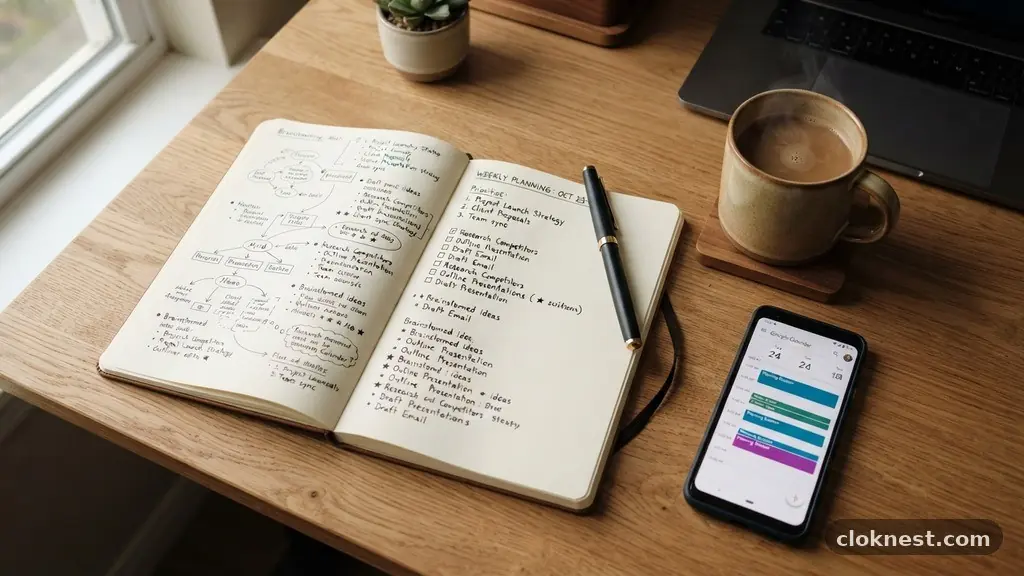
Take a blank sheet of paper or open a digital note-taking app and write down everything currently occupying your mind. Include professional projects, household chores, upcoming social commitments, and even those lingering “someday” ideas. Do not worry about structure or priority at this stage.
The goal is simply to get every open loop out of your head and onto a tangible surface. Once it is written down, your brain can stop the constant background loop of trying to remember it all.
A common mistake here is trying to organize the list while you are still in the middle of writing it. If you stop to categorize or prioritize every single item, you will lose the momentum of the brain dump. Treat this as a pure extraction process.
Once you have cleared your mind, you will feel an immediate sense of relief. This foundation allows you to move into the actual process of planning your week for better productivity with a clear and focused perspective.
Categorizing and Filtering Your Tasks
Now that you have a comprehensive list, it is time to sift through the noise. Most of the things we write down fall into one of two categories: high-impact actions or low-value clutter. Start by looking at your list and assigning a status to each item.
You might use a simple system like “Do,” “Delegate,” “Defer,” or “Delete.” This method, often associated with time management experts, helps you avoid the trap of being busy without being effective.
Ask yourself which tasks actually move the needle on your primary goals. If an item doesn’t directly contribute to your long-term success or your immediate responsibilities, consider if it truly needs your attention this week.
Many people struggle with the “everything is urgent” mindset. By ruthlessly questioning the necessity of each item, you protect your time from being hijacked by trivial tasks that masquerade as important work.
One frequent error is failing to distinguish between “urgent” and “important.” An email that just arrived might feel urgent, but it may not be important to your core objectives. When you categorize your tasks, prioritize those that require your unique expertise and focus.
If a task can be handled by someone else or delayed until a quieter period, move it to a different list. This filtering process is essential for maintaining high levels of output without sacrificing your quality of life.
Defining Your Top Three Priorities
Once you have filtered your list, identify the three most significant outcomes you want to achieve by the end of the week. These should be your “Big Rocks”—the substantial tasks that, if completed, would make the rest of the week feel like a success.
If you try to accomplish ten major things, you will likely end up finishing none of them to a high standard. Limiting your focus to three core priorities forces you to make hard decisions about what truly matters.
Write these three goals at the top of your planner or digital dashboard. They should be specific and measurable. Instead of writing “work on project,” write “complete the first draft of the client proposal.”
By defining the end state, you know exactly when you have succeeded. When you start your day, these three priorities should be the first things you look at, ensuring that your energy is directed toward your most valuable work.
A common pitfall is choosing priorities that are too vague or too large. If a priority feels overwhelming, break it down into smaller, actionable steps that can be completed within a single day.
If you don’t break these large goals into manageable chunks, you will find yourself procrastinating because the work feels too daunting. Always remember that your time is a finite resource; by protecting your top three priorities, you ensure that you are spending that resource wisely.
Scheduling Your Deep Work Blocks
Time blocking is the practice of assigning specific chunks of time to specific tasks. Instead of working from a reactive to-do list, you build your day around your most important priorities.
Identify the time of day when you are most alert and creative—for many people, this is the first few hours of the morning—and protect that time for your most challenging work. During these blocks, eliminate all distractions, including notifications, email, and social media.
Think of your schedule as a series of appointments with yourself. If you wouldn’t cancel a meeting with a high-profile client, you shouldn’t cancel your “deep work” session. When you block out two hours to focus on a complex report, treat that time as non-negotiable.
This discipline is what separates those who are constantly busy from those who consistently produce exceptional results. It requires a shift in mindset from reacting to external demands to proactively managing your own internal resources.
Avoid the mistake of over-scheduling your day. If your calendar is packed from 8:00 AM to 5:00 PM with no breathing room, you are setting yourself up for failure the moment one task takes longer than expected.
Always leave “buffer blocks” in your schedule. These are chunks of 30 to 60 minutes left intentionally empty to handle unexpected interruptions, urgent emails, or simply to give your brain a moment to reset.
Managing Energy Instead of Just Time
Productivity is as much about energy management as it is about time management. You can have a perfect schedule, but if you are exhausted, your output will suffer. Start by tracking your energy levels throughout the week.
Notice when you feel sharp and ready to tackle complex problems, and notice when you experience the inevitable afternoon slump. Use this data to inform how you arrange your weekly tasks.
Schedule your high-energy tasks—like writing, strategic planning, or creative brainstorming—during your peak hours. Use your lower-energy periods for administrative work, such as clearing out your inbox, filing documents, or attending routine meetings.
When you align your workload with your biological rhythms, you will find that you can accomplish more in less time. This approach reduces the friction of getting started on difficult tasks because you are working with your natural inclinations rather than against them.
One common mistake is ignoring the need for regular breaks. Many people believe that working straight through lunch or skipping breaks makes them more productive. In reality, the brain needs downtime to consolidate information and prevent fatigue.
Following the National Institute for Occupational Safety and Health guidelines on workplace stress can help you understand the importance of rest in maintaining long-term performance. Incorporate short, intentional breaks into your schedule to keep your focus sharp throughout the entire week.
Reviewing and Adjusting as Needed
A weekly plan is a living document, not a rigid prison. No matter how carefully you plan, life will inevitably intervene with surprises, emergencies, and shifting priorities. The key to staying productive is to build in a review process.
At the end of each day, take five or ten minutes to look at what you accomplished and what remains. Did you finish your primary tasks? Did you get sidetracked by low-value activities?
Use this daily reflection to adjust your plan for the following day. If you didn’t finish a key task, decide whether it needs to be carried over or if it can be dropped. If you find yourself consistently missing your targets, take a moment to analyze why.
Is your schedule too optimistic? Are you underestimating how long tasks take? This cycle of planning, acting, and reflecting is the hallmark of someone who understands how to manage their life effectively.
Avoid the mistake of abandoning your entire plan when things go wrong. It is easy to get discouraged when a single morning goes off the rails and decide that the whole day is a wash. Instead, treat it as a minor course correction.
Simply re-evaluate your priorities and decide what is the most important thing you can do for the remainder of the day. This resilience is a critical skill for maintaining productivity over the long term.
Building Sustainable Habits
Planning your week for better productivity is not a one-time event; it is a habit that strengthens with practice. To make this stick, find a time each week that works best for your reflection and planning.
Many people prefer Sunday evening to set the tone, while others prefer Friday afternoon to clear the decks before the weekend. Consistency is more important than the specific day or time you choose.
Create a ritual around your planning session. Maybe you make a cup of coffee, put on your favorite music, or go to a quiet local cafe.
By associating the task with a pleasant environment, you reduce the resistance to starting it. Over time, this weekly session will become a natural part of your rhythm, something you look forward to rather than a chore you dread.
A major mistake is trying to overhaul your entire life at once. If you are not used to planning, start small. Perhaps this week you only focus on identifying your top three priorities.
Next week, you can add time blocking or energy management. By building these skills incrementally, you ensure that they become permanent fixtures in your life rather than temporary experiments that fade away when you get busy.
FAQ: Common Questions on Weekly Planning
What is the 3-3-3 rule of productivity?
The 3-3-3 rule is a simple framework for balancing your workload. It suggests you should spend three hours on your most important project, accomplish three smaller tasks, and dedicate time to three maintenance tasks—like responding to emails or organizing files. This structure helps ensure that you make meaningful progress on big goals while still handling the necessary day-to-day work.
What are the five D’s of productivity?
The five D’s are a decision-making model for managing your to-do list: Do, Defer, Delegate, Delete, and Diminish. When you encounter a task, you decide to “Do” it immediately if it’s quick, “Defer” it to a specific time, “Delegate” it to someone else, “Delete” it if it’s unnecessary, or “Diminish” the time you spend on it if it’s a low-value activity. This helps you process your list rapidly.
Should I plan my week on paper or digitally?
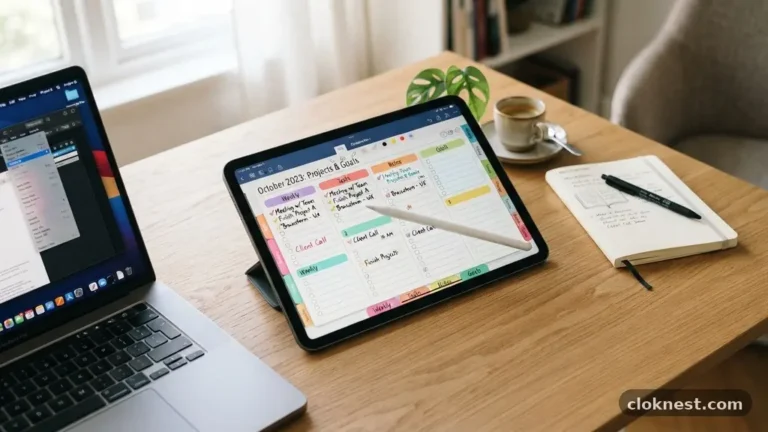
The best method is the one you actually use consistently. Digital tools offer the benefits of easy editing, reminders, and cross-device syncing, which is helpful for complex schedules. Paper planners offer the benefit of focus and the tactile satisfaction of physically crossing items off, which some people find more rewarding. Experiment with both to see which aligns better with your personal workflow.
How do I handle tasks that keep getting pushed to the next day?
If a task keeps moving to the next day’s list, it is usually a sign of one of two things: it is not a true priority, or it is too large to be a single task. Try breaking the task into even smaller, more specific steps. If you still find yourself avoiding it, evaluate whether it is truly necessary for you to do it at all. Sometimes, the most productive choice is to acknowledge that a task is no longer worth your time.
Final Thoughts on Weekly Planning
Finding the right rhythm for your life requires patience and a willingness to experiment with what works best for your unique goals. By consistently planning your week for better productivity, you gain the clarity needed to focus on what truly matters while letting go of the distractions that often clutter our days. Remember that the goal is not to fill every single minute with work, but to create a structure that supports both your professional ambitions and your personal well-being.
As you move forward, keep your approach flexible and kind to yourself. Some weeks will go exactly as planned, and others will require constant adjustment, which is a normal part of the process.
Start by implementing one or two of these strategies this coming week, and notice how much lighter your workload feels when you have a clear direction. You are capable of mastering your schedule and creating a life that feels both productive and deeply satisfying.