How to Make a Simple Daily To Do List
Making a Simple Daily To Do List is an essential habit for anyone looking to reclaim their time and reduce mental clutter. By capturing your responsibilities in one place, you shift the burden of remembering from your brain to a reliable system. This practice allows you to focus on executing your work rather than constantly worrying about what might be slipping through the cracks.
Once you start organizing your day with intention, you will find that your productivity increases and your stress levels drop significantly. This article will help you master the art of intentional planning so you can finish your day feeling accomplished and clear-headed.
Choose Your Preferred Medium
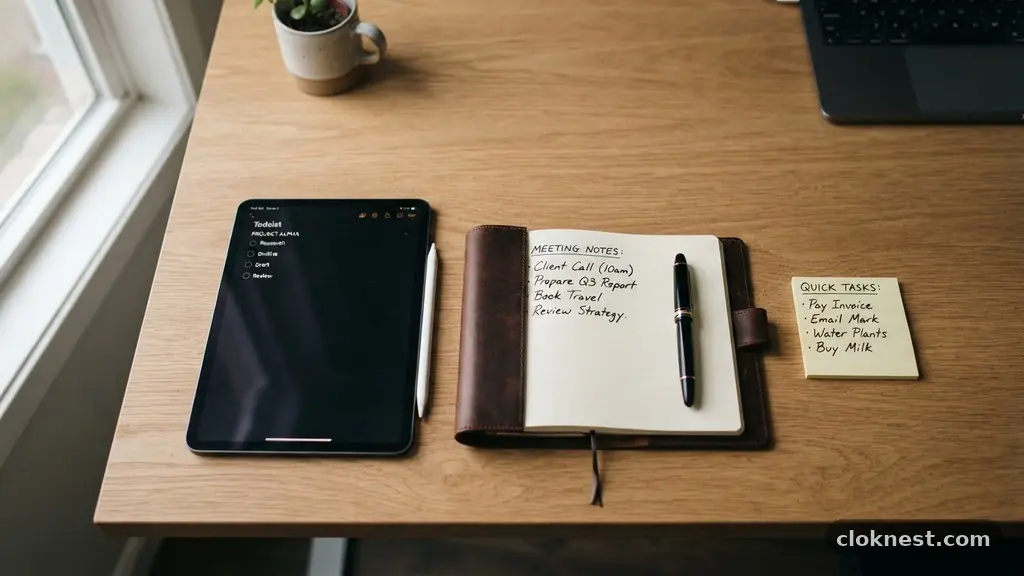
The first step in building a sustainable habit is selecting a tool that feels natural to you. Some people swear by the tactile experience of pen and paper, finding that the physical act of writing helps them internalize their goals.
Others prefer the convenience of digital tools, which offer features like reminders, recurring entries, and easy editing. There is no objectively correct choice, only the one that you will actually use every single morning without fail.
If you choose paper, keep it simple. A basic notebook or a single sheet of paper works perfectly. The danger with fancy planners is that they often become a project in themselves, leading to procrastination rather than progress.
If you opt for an app, stick to one that is minimalist. Avoid complex project management software that requires constant maintenance unless you are handling a massive workload. The goal is speed and simplicity, ensuring that your system supports your day instead of complicating it.
Limit Your Daily Tasks
A common mistake is treating a list like a wish list rather than a roadmap for the next twenty-four hours. When you cram fifteen items onto a page, you set yourself up for failure before the morning even begins.
Instead, try to identify three to five core objectives that truly move the needle. By limiting the number of items, you force yourself to prioritize the most important work, which is the secret to high performance.
Think of these as your “non-negotiables.” If you accomplish these specific objectives, the day will be a success regardless of what else happens. You can always add smaller, administrative chores later if you have extra time, but those should never crowd out your primary focus.
This approach prevents the overwhelmed feeling that often leads to burnout and paralysis. Remember, it is better to complete three meaningful tasks than to partially finish ten irrelevant ones.
Use the Power of Time Blocking
Once you have your list, you need to assign a home for these tasks within your schedule. A list without a time component is just a collection of intentions that often drift away as the day gets busy.
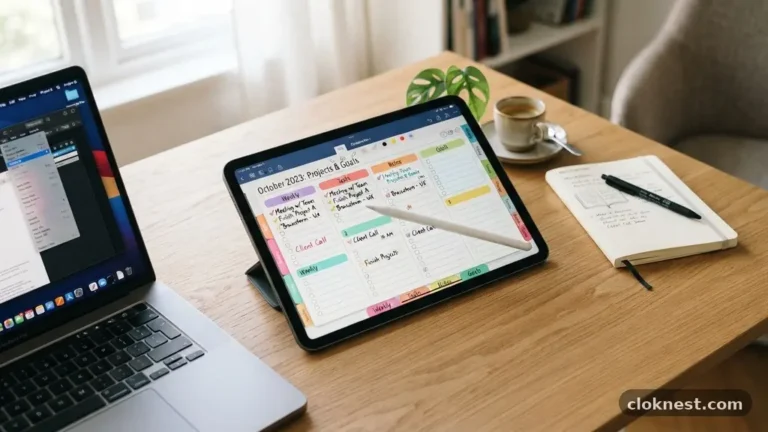
By integrating your items into a calendar, you create a realistic plan that accounts for how long things actually take to complete. This transition from a vague list to a concrete schedule is how you gain control over your day.
When you block out time, be generous with your estimates. Most of us suffer from the planning fallacy, where we consistently underestimate how long a project will take. If you think a task will take thirty minutes, block out forty-five.
This buffer space protects your schedule from unexpected interruptions, like an urgent email or a sudden phone call. If you finish early, you get a bonus period of rest or a head start on tomorrow’s work.
Prioritize with the Eisenhower Method
Not every task on your list carries the same weight, yet we often treat them as equals. Using a simple framework like the Eisenhower Matrix can help you categorize your work based on urgency and importance.
This ensures that you aren’t spending your peak energy hours on low-value busy work. It is a fundamental strategy for anyone serious about making a Simple Daily To Do List that actually drives results.
Focus your energy on tasks that are important but not necessarily urgent, as these are the things that build long-term value. If you spend all your time putting out fires, you will never get ahead on the projects that matter. Move the urgent but unimportant tasks to later in the day, or delegate them if possible.
By consciously sorting your work, you stop being reactive and start being proactive about your goals. You can explore more about time management principles through the American Psychological Association’s guidance on time management to refine your approach further.
Create a Consistent Morning Ritual
The timing of your list creation is just as important as the content itself. Many people find success by preparing their list the night before, while others prefer to do it with their first cup of coffee.
The key is to make it a non-negotiable part of your routine. If you leave it to chance, you will likely skip it on busy days, which is exactly when you need a clear plan the most.
When you make this a ritual, you reduce the decision fatigue that plagues our mornings. You don’t have to wake up and wonder what to do; you simply look at the plan you already created. This consistency builds momentum.
Over time, the act of checking your list becomes a satisfying trigger that tells your brain it is time to shift into work mode. Treat this five-minute window as a sacred investment in your own efficiency.
Break Down Large Projects
One of the biggest reasons people avoid their lists is that the items are too vague or intimidating. Writing “Finish Report” is a recipe for procrastination because your brain doesn’t know where to start.
Instead, break that massive project into smaller, actionable steps that take thirty minutes or less to complete. This makes the work feel manageable and provides a steady stream of small wins throughout the day.
Instead of “Finish Report,” try “Outline report structure,” then “Write introduction,” and finally “Draft first three sections.” When you see these smaller steps, the barrier to entry drops significantly. You aren’t staring at a mountain; you are just walking up a single step.
This technique turns impossible-looking projects into a series of simple actions. It is a psychological hack that keeps you moving forward even when motivation is low.
Review and Adjust Regularly
A list should be a living document, not a rigid set of rules that you are forced to follow regardless of reality. If something changes—a meeting is canceled or a new priority arises—don’t be afraid to adjust your list.
The purpose of the tool is to serve you, not the other way around. A quick midday check-in allows you to pivot and ensure that your remaining time is spent as effectively as possible.
At the end of the day, perform a brief review of your progress. Did you complete your priority items? If not, why?
Were you interrupted, or did you underestimate the time required? This reflection is where the real growth happens.
By learning from your own patterns, you become better at planning each subsequent day. You start to understand your own rhythm, knowing when you work best and which tasks tend to drag on longer than they should.
Embrace Flexibility and Forgiveness
There will be days when everything goes wrong and you finish almost nothing on your list. This is normal, and it is not a sign of failure.
The goal of making a Simple Daily To Do List is to maintain a sense of direction, not to be a perfect robot. When things go off the rails, simply reset, look at what is left, and decide what is still worth doing.
Don’t let a bad day discourage you from starting fresh tomorrow. If you find yourself consistently failing to finish your list, it might be a sign that you are overestimating your capacity. Be honest with yourself.
It is much better to have a modest list that you finish every day than an ambitious one that leaves you feeling defeated every evening. Cultivate a mindset of kindness toward yourself, focusing on progress rather than perfection.
Frequently Asked Questions
What is the 3-3-3 rule for tasks?
The 3-3-3 rule is a simple framework for balancing your day. It suggests that you complete three hours of deep work on your most important project, finish three shorter tasks, and take care of three maintenance or administrative items. This helps ensure that you make progress on your big goals while still keeping up with the necessary daily upkeep of your life.
How do I create an effective daily to-do list?
Effective lists are short, specific, and prioritized. Start by choosing your top three tasks, break them down into smaller steps, and assign them a specific time in your calendar. Keep your list in a single, accessible location and resist the urge to add more items until you have cleared your primary objectives.
What is the best free app for creating daily to-do lists?
There are many excellent free options, and the “best” one depends on your style. Simple apps like Microsoft To Do, Google Tasks, or the native Notes app on your phone are often better than complex ones because they are fast and distraction-free. Choose the one that feels the most intuitive and requires the least amount of setup time.
How can I create a homemade to-do list?
You only need a simple notepad and a pen. Write the date at the top, list your three main priorities, and leave space for a few smaller items below. Some people find it helpful to draw a small box next to each item so they can physically check it off, which provides a satisfying sense of completion.
Final Thoughts
Mastering the habit of making a Simple Daily To Do List is one of the most effective ways to lower your stress and increase your daily output. By focusing on a few core objectives and treating your time as a finite resource, you stop drifting through your hours and start directing them toward what truly matters.
Remember that the system you choose is far less important than the consistency with which you use it. Start small, be kind to yourself when plans shift, and enjoy the clarity that comes from knowing exactly where you need to focus your energy.
Take a few minutes this evening to write down your top priorities for tomorrow. You will wake up with a sense of purpose and a clear path forward.
If you have any questions or want to share a tip that has worked for your routine, feel free to reach out and share your experience. Happy planning!