
The Purpose and Practice of Weekly Planning
Weekly Planning serves as the bridge between your long-term ambitions and the immediate actions you take each day. By carving out a dedicated window to look ahead, you transform a chaotic list of obligations into a clear, intentional roadmap for the days to come. This practice isn’t just about cramming more tasks into your calendar; it’s about aligning your daily efforts with your bigger goals to ensure you’re moving in the right direction.
When you take control of your time, you reduce stress, sharpen your focus, and create space for the work that truly matters. Mastering this habit allows you to navigate your responsibilities with confidence and intention rather than constant reactivity.
Setting the Stage for Your Review
The most effective approach begins with finding a calm environment where you can think clearly. You cannot plan effectively if you are constantly interrupted or mentally scattered by the noise of the previous week. Whether you prefer a quiet corner of a coffee shop or your desk at home, ensure you have your calendar, a notebook, and any relevant project management tools open before you begin.
Create a ritual around this time. Treat it as a non-negotiable appointment with yourself. If you try to squeeze it into a five-minute window between other meetings, you will likely miss the forest for the trees.
Give yourself at least thirty to forty-five minutes to look at the big picture. This period of reflection is the foundation upon which your entire week will be built, so don’t rush the process.
A common mistake is attempting to plan while simultaneously doing other tasks. Multitasking during your review period dilutes your focus and often leads to missed deadlines or forgotten commitments.
Close your email tabs, turn off non-essential notifications, and commit entirely to the act of organizing your upcoming seven days. By isolating this time, you ensure that you enter the work week with a clear, calm, and prepared mind.
Clearing the Mental Clutter
Before you look forward, you must clear out the lingering remnants of the past. This process, often referred to as a “brain dump,” involves capturing every open loop, incomplete task, or lingering thought that is occupying mental space. If you don’t write these items down, they will continue to nag at you, creating a background hum of anxiety that makes it harder to concentrate on your current priorities.
Grab a blank sheet of paper and list everything that comes to mind. It doesn’t matter how small or trivial the task seems; if it’s on your mind, it belongs on the list.
Include professional projects, personal errands, household chores, and even those vague ideas you’ve been meaning to explore. Once everything is out of your head and onto paper, your brain can stop working so hard to “remember” these items.
The goal here is to achieve a state of mental clarity. When your brain isn’t busy holding onto dozens of loose threads, it has more capacity for creative problem-solving and deep work. Avoid the mistake of trying to organize this list immediately.
Keep the capture phase and the sorting phase separate to maintain your momentum. Once the dump is complete, you can begin to see the landscape of your week with much greater objective clarity.
Categorizing and Prioritizing Your Tasks
Now that your list is complete, it is time to impose order on the chaos. Not all tasks are created equal; some are urgent, some are important, and many are simply noise.
Review your brain dump and assign a priority level to each item. A simple system like the Eisenhower Matrix—dividing tasks into urgent/important, important/not urgent, urgent/not important, and neither—works wonders for many people.
Look for the “Big Three” for the week. These are the three high-impact objectives that, if completed, would make your week a success. Everything else on your list should be secondary to these primary goals.
By narrowing your focus to a few key areas, you prevent the common pitfall of trying to do everything at once. When you try to prioritize ten things, you effectively prioritize nothing.
Be realistic about your capacity. A major mistake is over-scheduling your week with back-to-back tasks, leaving no room for the inevitable unexpected events that arise.
If your list is longer than your available hours, you must cut, delegate, or postpone. It is far better to complete a few tasks with high quality than to finish a long list of items in a rushed, half-hearted manner.
Implementing Time Blocking
Once you have identified your priorities, you need to map them onto your calendar. This is where time blocking becomes essential.
Instead of working from a static to-do list, assign each task to a specific block of time. If a task doesn’t have a home on your calendar, it is much less likely to get done.
Treat these time blocks as real appointments. If you have a block for “Project Research” from 9:00 AM to 11:00 AM on Tuesday, honor that time just as you would honor a meeting with a client or your boss.
This technique forces you to acknowledge the reality of how long tasks actually take. When you see your week laid out in blocks, you quickly realize how little time you actually have, which encourages better decision-making.
Avoid the error of “optimistic scheduling.” We often underestimate how long a task will take or overestimate our own energy levels. Always build in a buffer of at least fifteen to thirty minutes between major blocks.
These small gaps allow for transitions, quick breaks, or the overflow that almost always happens. According to research on human cognition from sources like the American Psychological Association, managing your energy levels alongside your time is crucial for maintaining long-term performance.
Aligning Actions with Long-Term Goals
Weekly planning is not just about clearing your inbox; it is about steering your life in the direction you want to go. Every week, take a moment to look at your quarterly or annual goals.
Ask yourself if the tasks you have scheduled for the upcoming week actually serve those larger objectives. If you find that your week is filled with busywork that doesn’t advance your main goals, it is time to prune your schedule.
This alignment check prevents the slow drift that happens when we spend all our time on urgent, low-value tasks. It’s easy to feel productive when you are checking off small items, but that’s not the same as being effective.
If you want to write a book, for example, your weekly plan must include dedicated time for writing. If that time isn’t there, you aren’t actually working toward your goal, regardless of how “busy” you feel.
One common mistake is treating the weekly plan as a static document. Your life is dynamic, and your plan should be too. If a project changes or a new priority emerges, adjust your plan mid-week.
The goal of planning is to provide a framework for action, not to create a rigid cage that you are forced to follow at all costs. Flexibility allows you to maintain your flow even when circumstances shift.
Managing Energy and Preventing Burnout
Productivity is not just about time; it is about energy. You can have the most perfectly structured schedule in the world, but if you are physically or mentally exhausted, your output will suffer. During your planning session, consider when you are at your best.
If you do your most creative work in the morning, schedule your hardest tasks for that time. Save the more administrative, low-energy tasks for the afternoon when your focus naturally dips.
Be mindful of the signs of burnout. If you find that every week is a struggle to survive, you are likely over-committing. Use your weekly review to look for patterns of exhaustion.
Are you consistently skipping lunch? Are you working late every night?
Your weekly plan should include time for rest, exercise, and hobbies. These are not luxuries; they are essential components of sustainable high performance.
A common mistake is failing to schedule recovery time. We often think that “productive” time is only the time spent working, but rest is when your brain processes information and restores its capacity.
If you don’t build in time to step away from your screens, your work quality will eventually decline. Treat your downtime with the same level of respect you give your professional commitments.
Utilizing Productivity Tools Effectively
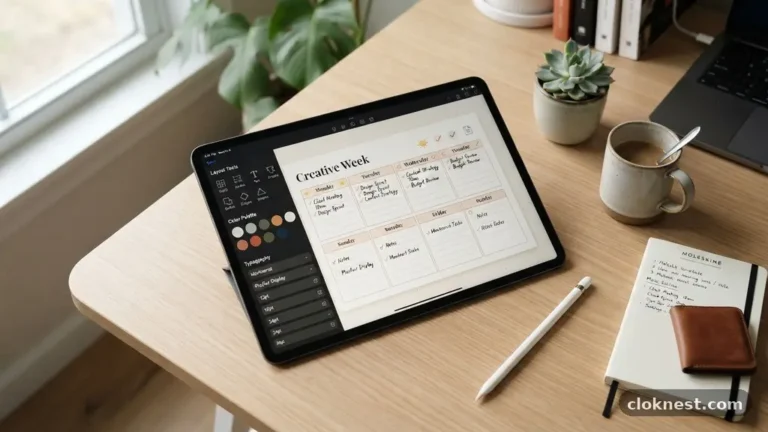
There is no shortage of productivity tools available today, from sophisticated digital apps to simple paper notebooks. The best tool is the one that you actually use consistently.
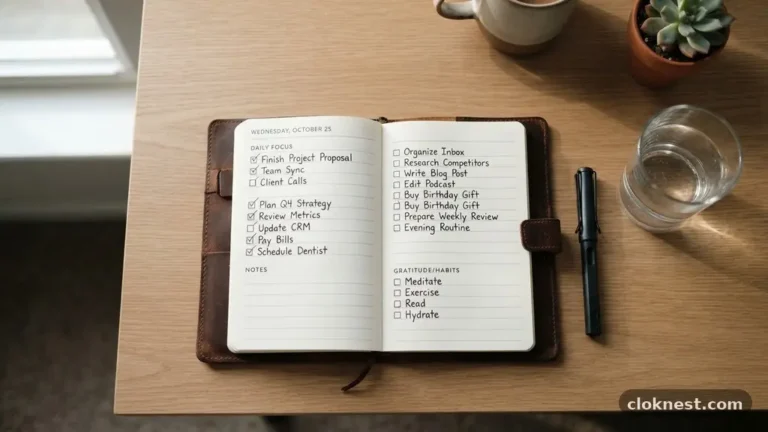
If you enjoy the tactile nature of writing, a physical weekly planner might be your best bet. If you prefer the flexibility of digital systems, tools like Google Calendar, Notion, or Trello can help you manage your tasks and time blocks.
Don’t fall into the trap of “productivity porn,” where you spend more time setting up your system than actually doing the work. You don’t need the most expensive software or the most complex template to be effective. A simple list on a piece of paper can be just as powerful as a complex digital dashboard if it helps you focus on what matters.
If you decide to use digital tools, keep them simple. Complexity is the enemy of consistency. If adding a task takes five minutes because of all the tags and categories you have to fill out, you will eventually stop using the system.
Choose a tool that supports your workflow rather than dictating it. The purpose of any tool is to help you manage time efficiently, not to add more work to your plate.
Refining Your Workflow Over Time
Your planning process should evolve as you learn more about your own habits and preferences. After a few weeks of consistent practice, look back at your previous plans. What worked?
What didn’t? Where did you consistently fall behind?
These questions are the key to continuous improvement. If you always underestimate the time for a certain task, adjust your estimates in future plans.
Invite feedback from your own experience. If you notice that you always feel sluggish on Wednesday afternoons, try moving your hardest meetings to the morning.
If you find that you’re constantly distracted, consider changing your environment. The art of planning is iterative; you are constantly tweaking your approach to better suit your needs.
A common mistake is giving up on planning because it didn’t work perfectly the first time. It takes time to build the habit of introspection and scheduling. Don’t be discouraged by a “bad” week where things didn’t go according to plan.
Use those instances as data points to help you build a more realistic and effective plan for the following week. This cycle of planning, acting, and reflecting is what ultimately leads to mastery.
Common Questions About Weekly Planning
What is the best time to do my weekly review?
The best time is whenever you can consistently commit to it. Many people prefer Friday afternoon to clear their desk before the weekend, while others prefer Sunday evening to start the week with a clear head. Choose a time that allows you to be uninterrupted and reflective.
How do I handle unexpected tasks that pop up during the week?
Treat your plan as a guide, not a prison. When an unexpected task arises, evaluate its urgency. If it’s truly urgent, swap it with a lower-priority task currently on your schedule. If it can wait, add it to your “to-do” list for later rather than derailing your current focus.
Is it better to use a digital or paper planner?
This depends entirely on your personal style. Paper planners offer a tactile experience that can help with memory and focus, while digital planners offer flexibility, searchability, and integration with other apps. Experiment with both to see which helps you stay more consistent.
How do I stop over-committing myself?
The best way to stop over-committing is to start tracking your time. When you see how long things actually take, you’ll be much less likely to cram too much into one week. Always leave at least twenty percent of your time unallocated for the unexpected.
What should I do if I miss a week of planning?
Don’t worry about it. Perfection isn’t the goal; progress is. If you miss a week, simply pick it back up the next time. The habit is more important than any single missed session. Just acknowledge the slip, reset, and start again with your next review.
Conclusion
Weekly Planning is a powerful practice that allows you to take command of your schedule and move toward your goals with purpose. By dedicating time to look ahead, you transform your week from a series of reactive events into a series of intentional choices. This consistency helps you manage your energy, reduce stress, and ensure that you are focusing on the work that truly matters.
Start small by setting aside that initial block of time this weekend. You will find that the clarity you gain far outweighs the time you invest.
Once you begin to see the positive impact on your productivity and peace of mind, you’ll likely find that this weekly ritual becomes one of the most important parts of your routine. Embrace the process, stay flexible, and enjoy the sense of accomplishment that comes with living your life by design.