Strategies for Staying Focused and Avoiding Distractions While Working
Mastering the art of avoiding Distractions While Working requires more than just willpower; it demands a deliberate architectural shift in how you structure your day. When you create an environment that minimizes interruptions, you protect your most valuable asset: your cognitive energy. By implementing systematic boundaries and environmental controls, you can reclaim hours of lost productivity and reduce the mental fatigue that often follows a scattered day.
This article provides actionable, human-centered steps to help you regain control of your attention, ensuring that you can tackle complex tasks with clarity and calm. Whether you are managing a bustling home office or a corporate cubicle, these strategies will help you maintain a steady, productive flow throughout your working hours.
Establish a Dedicated Workspace Environment
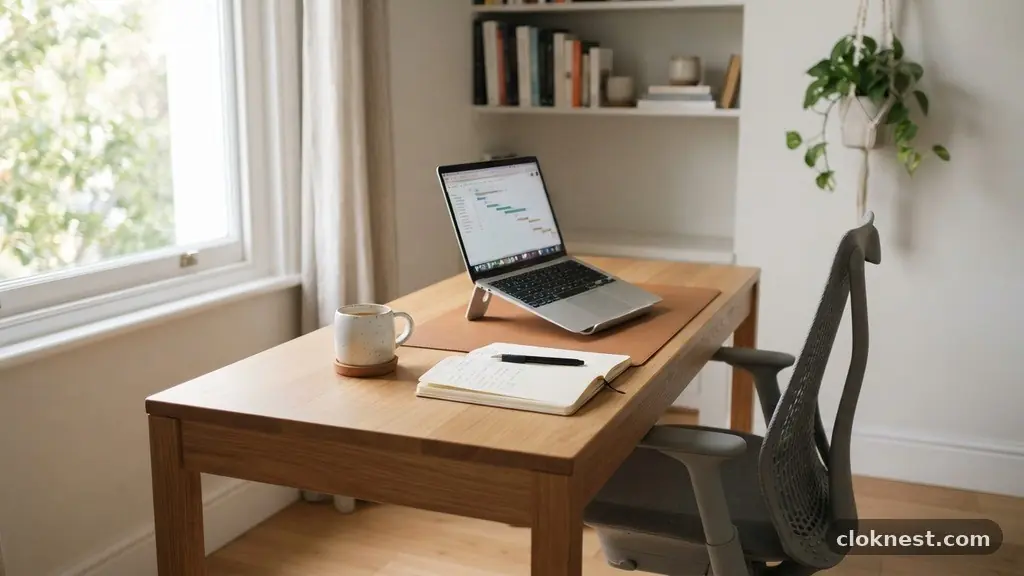
Your physical environment acts as a primary trigger for your brain’s state of focus. If you work from a couch or a kitchen table, your mind struggles to distinguish between leisure time and professional output. Creating a physical boundary signals to your brain that it is time to engage with specific tasks.
This does not require a sprawling home office; even a small, dedicated desk can suffice. The goal is to associate a specific location with the act of working, which naturally helps when avoiding Distractions While Working.
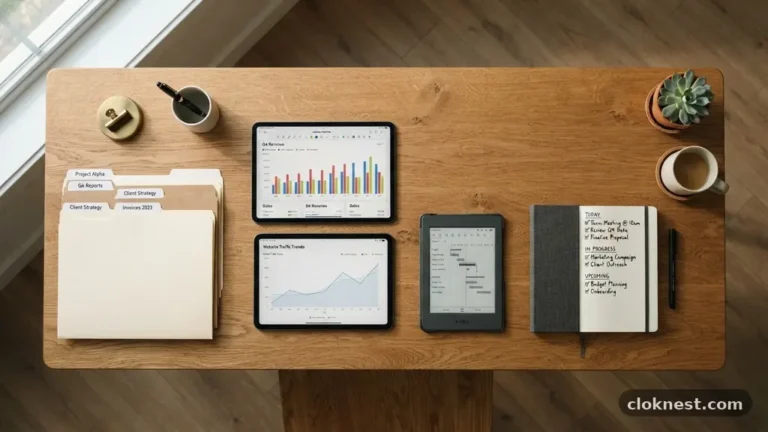
When your space is cluttered, your mind often feels cluttered as well. Keep your desk clear of items that do not contribute to your current project. If you have stacks of mail, unwashed dishes, or unrelated paperwork nearby, your peripheral vision will constantly register these items as unfinished business.
Try to keep only the essentials within arm’s reach. By limiting visual noise, you allow your focus to remain locked on the screen or document in front of you, rather than drifting toward the laundry pile in the corner.
A common mistake is assuming that a “cozy” workspace is always the best one. While comfort is important, you need enough structure to prevent yourself from slipping into a relaxed state that invites procrastination. If you find yourself slouching or getting sleepy, your environment might be too comfortable.
Invest in a chair that provides proper support and ensure your lighting is bright enough to keep you alert. When you treat your workspace with professional respect, your productivity will naturally follow suit.
Implement Time-Blocking Techniques
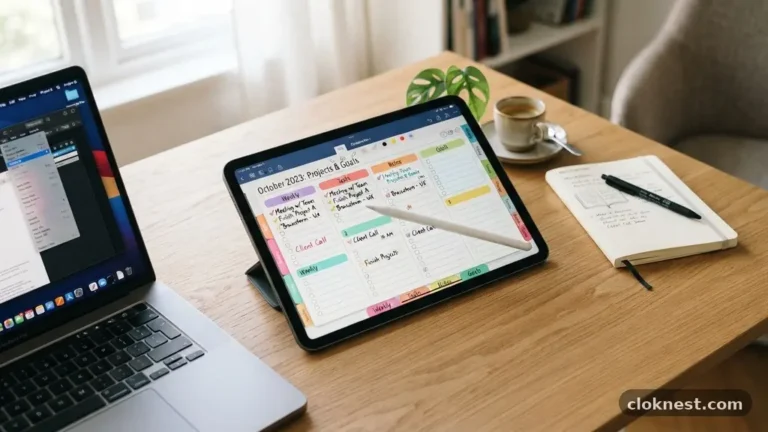
Time-blocking is the practice of carving your day into distinct segments dedicated to specific categories of work. Instead of staring at a massive to-do list and wondering where to start, you assign each task a specific window on your calendar.
This method forces you to confront the reality of your limited time. When you know you only have sixty minutes to finish a report, you are far less likely to spend twenty of those minutes checking emails or browsing news sites.
The primary benefit of this approach is the reduction of decision fatigue. When you don’t have to decide what to work on next, you save mental bandwidth for the actual work. You simply look at your calendar, see the current block, and begin.
This removes the “what should I do now?” friction that often leads to aimless task-switching. It is a powerful way to structure your day so that your most important goals receive the best of your energy.
A frequent error people make is overestimating how much they can accomplish in a single block. If you schedule a three-hour window for a complex task but only give yourself thirty minutes for a quick email check, you will inevitably fall behind. Be realistic with your time estimates.
If you are uncertain how long a task takes, track your time for a few days to get a baseline. According to research on human cognitive performance, you can learn more about managing your attention span by visiting the American Psychological Association’s guide on multitasking.
Master the Art of Digital Minimalism
Your mobile phone is arguably the most significant source of interruptions in the modern era. Every notification acts as a siren call, pulling your attention away from your current objective. To regain your focus, you must control your devices rather than letting them control you.
Start by disabling non-essential notifications on both your phone and computer. If an alert is not urgent or personal, it does not deserve an immediate interruption of your workflow.
Consider keeping your phone in another room or inside a drawer while you are in the middle of a deep-work session. If the device is within sight, your brain will spend a portion of its resources monitoring it for activity, even if it is muted.
This phenomenon, often called “brain drain,” is a silent killer of productivity. By physically separating yourself from the device, you remove the temptation to check it during minor lulls in your work.
A common mistake is believing you can successfully multitask by keeping communication apps open. People often think they are being efficient by monitoring Slack or email while working on a project, but this is a fallacy. Every time you switch your attention, it takes several minutes to re-engage with the complexity of your task.
Close the tabs that aren’t necessary for your immediate goal. If you need to stay reachable, set specific “check-in” times rather than maintaining a constant vigil.
Utilize the Power of the Timer
Using a timer is a simple but transformative way to gamify your focus. The Pomodoro Technique is a classic example: you work for 25 minutes and then take a 5-minute break.
This structure works because it promises your brain a rest in the near future, making it easier to ignore distractions in the present. It turns a long, daunting day into a series of manageable, high-intensity sprints.
When you set a timer, you create a sense of urgency that helps you push through the initial resistance of starting a task. When you feel the urge to check social media or wander off-task, the ticking clock serves as a gentle reminder that your current session is limited. It helps you stay grounded in the present moment, rather than allowing your mind to wander toward future worries or unrelated projects.
Avoid the temptation to skip your breaks. When you push through a session without a rest, your focus quality will degrade rapidly. You might feel like you are working hard, but your output will likely become error-prone and shallow.
Use your breaks to stand up, stretch, or look out a window—anything that takes your eyes off a screen. By giving your brain these brief moments of recovery, you ensure that you have the stamina to remain productive throughout the entire day.
Control Your Internal Distractions
Not all interruptions come from the outside; many of the most persistent ones originate from within our own minds. When you are working, you will inevitably have random thoughts about groceries, emails you forgot to send, or errands that need running.
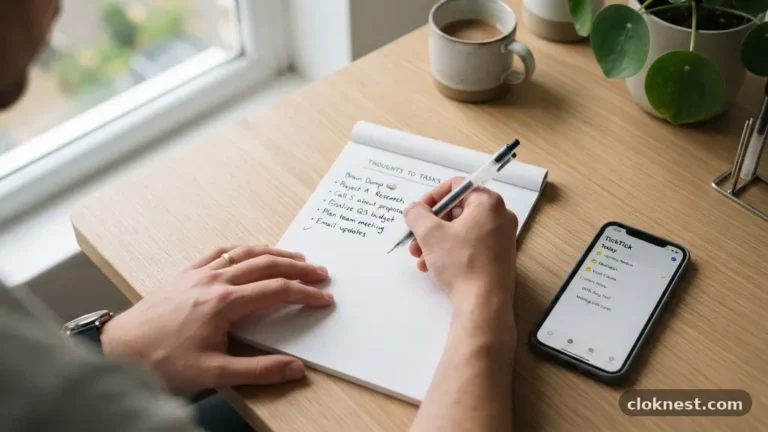
Instead of acting on these thoughts immediately, keep a “distraction pad” next to your keyboard. Whenever a non-work thought pops up, quickly jot it down and return to your task.
This technique is effective because it honors the thought without allowing it to derail your progress. By writing it down, you tell your brain, “I have captured this information; I don’t need to keep rehearsing it in my head.”
Once the thought is safely on paper, you can deal with it during a scheduled break or at the end of the day. This simple act of offloading mental baggage allows you to return to your work with a clear, focused mind.
A common mistake is trying to suppress these thoughts entirely. Suppression rarely works; the more you try not to think about something, the more prominent it becomes. Acceptance and documentation are far more effective.
Acknowledge the thought, record it, and let it go. This builds your resilience over time, teaching your brain that it can handle interruptions without having to switch tasks immediately.
Designate Boundaries for Communication
In many modern roles, the expectation of instant availability is a significant barrier to deep work. If you are constantly responding to messages, you are essentially letting other people dictate your schedule.
To succeed in avoiding Distractions While Working, you must establish clear boundaries with your colleagues or clients. This might mean setting your status to “busy” during specific hours or clearly communicating when you are unavailable for meetings.
If you work in a shared office or a home environment with others, use visual cues to signal when you are in a deep-work phase. A closed door, wearing noise-canceling headphones, or even a simple sign can prevent casual interruptions. People are usually respectful of these boundaries once they understand that you are not being antisocial, but rather trying to ensure your work is of the highest quality.
Don’t fall into the trap of being “always on.” Many people feel a sense of guilt when they don’t reply to a message within seconds. However, this expectation is often self-imposed.
Most tasks do not require an instantaneous response. By batching your communication into specific times—such as once in the morning and once in the afternoon—you protect your focus while still maintaining professional standards. You will find that people quickly adapt to your new, more disciplined communication style.
Cultivate a Ritual to Start Your Day
The way you begin your morning sets the tone for your entire day. If you start by checking news headlines or social media, you have already invited a flood of external stimuli into your mind before you have even begun to work.
Instead, create a ritual that signals the transition into a professional state. This could be as simple as making a cup of coffee, tidying your desk, or reviewing your top three priorities for the day.
Your ritual serves as a psychological anchor. By repeating the same sequence of actions, you condition your brain to shift gears.
This is particularly important if you work from home, where the lines between your personal and professional life are often blurred. Your ritual provides the structure that your environment lacks, helping you enter a state of flow more quickly and consistently.
One common mistake is making your morning ritual too complex or time-consuming. If it takes an hour to “get ready to work,” you will likely end up procrastinating or skipping the ritual altogether. Keep it short, simple, and effective.
The goal is to create a seamless transition that minimizes the friction of starting. When you have a reliable way to get into the zone, you spend less time worrying about distractions and more time producing meaningful results.
Review and Adjust Your Workflow Regularly
What works for you in one month may not be as effective the next. Your workload, your energy levels, and your environment are always shifting. It is essential to conduct a weekly review of your habits to see what is still working and what needs adjustment.
Ask yourself: “When did I feel most distracted this week?” and “What triggered those moments?” By identifying the root causes of your interruptions, you can iterate on your system.
Perhaps you realize that you are always distracted at 2:00 PM, right after lunch. Instead of fighting it, you might schedule your easiest, most administrative tasks for that time, saving your high-focus work for the morning when your mental energy is at its peak.
This type of self-awareness is the key to long-term productivity. You are not a machine; you are a person with natural ebbs and flows in energy, and your system should reflect that.
Avoid the trap of perfectionism. If you have a day where you get distracted, don’t beat yourself up. Productivity is a practice, not a destination.
Simply analyze what happened, adjust your environment or your schedule for the next day, and keep moving forward. The goal is to create a sustainable way of working that allows you to thrive, not to create a rigid, impossible standard that leaves you feeling frustrated and burned out.
Frequently Asked Questions
How can I stop my mind from wandering to personal tasks while I am at my desk?
The best way to manage internal wandering is to keep a physical notepad nearby. Whenever a thought about a personal chore or an unrelated idea appears, write it down immediately. This “parking lot” method allows you to clear the thought from your active memory so you can refocus on your work without the fear of forgetting the task later.
Is it possible to be productive while working in a noisy environment?
Yes, it is possible, but it requires tools to manage your sensory input. High-quality noise-canceling headphones are often the best investment for this purpose. Even if you don’t listen to music, the silence they provide can be enough to help you stay in a flow state. If you can’t control the volume of your surroundings, try using white noise or ambient sound apps to mask distracting background chatter.
What if my job requires me to be available at all times?
If your role truly demands constant availability, focus on “batching” your availability. Rather than keeping every communication channel open, set specific intervals where you check and respond to everything at once. Communicate these windows to your team so they know when to expect a response. This allows you to carve out periods of intense focus while still meeting your professional obligations.
How long does it take to build the habit of staying focused?
Building new habits is a gradual process that usually takes several weeks of consistent effort. Start small by implementing just one of the strategies mentioned, such as using a timer or clearing your desk, and stick with it for at least two weeks before adding another. Don’t worry about being perfect; focus on the trend of improvement over time.
Are there specific times of day that are better for deep work?
Most people find their peak cognitive performance in the morning, shortly after starting their day. However, this varies based on your individual circadian rhythm. Experiment with doing your most challenging tasks at different times of the day for a week. You will likely notice a clear pattern where you feel more alert, creative, and capable of sustained concentration.
Conclusion
Developing the discipline to stay on track is a journey that pays dividends in both your career and your personal well-being. By intentionally designing your workspace, managing your digital inputs, and respecting your own energy levels, you can transform the way you approach your daily responsibilities. Remember that the goal is not to eliminate every possible interruption, but to build a system that allows you to regain your focus quickly when life inevitably happens.
Start by choosing one or two of the strategies discussed and apply them to your routine tomorrow. As you become more comfortable with these boundaries, you will find that avoiding Distractions While Working becomes a natural part of your professional rhythm.
If you find yourself struggling, simply reset and try again. Your attention is a limited and precious resource, and by protecting it, you are investing in your own success and peace of mind.